NSW 2026 draft homeschooling policy: What does it mean for families? | 53
Listen to this episode on

Watch this episode on

Listen to this episode on

About this episode
An important note for NSW families: nothing is in effect yet, and the current guidelines still apply until the policy is finalised. The draft keeps the three things registration has always asked of you: an education plan based on the NSW curriculum, records showing that plan is being delivered, and an assessment by an Authorised Person. It still doesn’t say exactly what’s required or how much evidence is enough. A key concern is that no urgent pathway has been added for families who can’t wait for the 12-week registration processing times.
Brett Campbell and Ellen Brown work through what the draft means in practice. What counts as evidence, where Authorised Persons come from and whether they must visit your house, how likely approval really is, and what you can do if you need to remove your child from school while awaiting registration.
Key points from this episode
- Nothing has changed yet. The Department has published drafts. The existing Guidelines remain in effect until a final policy lands.
- Parental choice survives into the new framework. The draft Policy states plainly that education is primarily the responsibility of the child’s parents.
- The draft does not say how much evidence is enough. It lists ways you can show learning, such as journals, checklists, excursions and digital portfolios, but sets no quantity for any of them.
- That leaves the judgement to your Authorised Person, and their approach can vary significantly.
- Refusal is rare. Families may get stressed thinking their application is unlikely to get approved, but if you have a plan, it is very likely your application will be approved.
- An audit recommended NSW speed up registration a year before the draft was written. The draft sets an indicative timeframe of up to 12 weeks, which is too long for some families.
- You can still act if your child cannot wait. An exemption from attendance comes from your school principal, not the Department, and taking your education plan to that meeting makes it much easier for a principal to say yes.
Nothing has changed yet for NSW homeschooling families
Homeschooling registration in NSW moved from NESA to the NSW Department of Education, and the drafts released on 27 July 2026 are the Department’s first framework. Consultation ran as a short survey and closed on 10 August 2026. The Department has confirmed that the current Guidelines remain in effect until the new policy is finalised.
If you are registered, or partway through an application, nothing about your obligations has changed.
What the NSW draft policy gets right about parental choice
The draft Policy states that the education of a child is primarily the responsibility of the child’s parents, and that parents may choose either school enrolment or homeschooling registration. Ellen believes this is really important, because the policy language preserves parents’ right to homeschool.
The second is flexibility. Parents write the education plan, decide how it is delivered, and can amend it during a registration period so it stays fit for purpose, including for children with disability or additional needs.
Brett points out you do not need a diagnosis in the family to benefit from the flexibility. The plan is meant to bend around the child in front of you, whoever that child is.
Both hosts agree that flexibility and structure are not opposite. Having a base to work from makes it possible to be flexible, try new things, and know you’re within the guardrails and ticking off all the boxes.
What evidence of learning means under the NSW draft
This is where there is some uncertainty, and Ellen states it is one of the things that makes parents most nervous.
The draft requires parents to keep records demonstrating how the child’s education plan is being implemented, and how the requirements and conditions of registration are being met. That is a broad requirement, and the FAQs confirm there is no mandatory quantity or format of evidence. Learning journals, checklists, excursions and digital portfolios are offered as examples rather than requirements.
The states handle this differently. Queensland tells you exactly how many pieces of work to supply and what they should look like. NSW gives you no number or format of evidence at all.
Why no set amount of evidence can be unsettling
| “Broadness is wonderful, but it can also be unsettling, because it then comes down to your Authorised Person to say, actually, this is too much, or this isn’t enough. That’s where parents can start to feel a little bit like it’s shifting sand.” — Ellen Brown |
Brett’s read is that breadth leads to ambiguity, and ambiguity leads to frustration and anxiety. He wants the Department to publish a minimum, so families know whether they are meeting the mark.
As a result, the NSW homeschooling community often fills the gap itself, comparing notes in forums about what different APs expect. It should be a lot clearer for families.
What an Authorised Person is checking for
When an AP turns up, it is not just to see what has been done, but to ensure that you’ve ticked the boxes aligned to the curriculum.
Euka is built around this. Every lesson carries the curriculum code it maps to, families can upload work into the portal for safekeeping, and the registration and reporting service turns completed lessons and parent comments into one report you can hand over.
Ellen homeschooled in NSW for 12 years, with different APs, and knows what it’s like to prepare reporting. The services at Euka reflect her experience and are built to help families feel confident in what they are putting forward.
Who your Authorised Person is and what the home visit involves
Once you apply, the Department organises your first meeting with an Authorised Person for your area. They review your plan and make a recommendation.
Most APs come out of the mainstream school system. Retired principals, experienced teachers, people who know what a good education looks like from the inside of a classroom. Ellen has never met one who came from a homeschooling background and says it will be nice when that finally happens.
Whether you are visited at home depends on the AP. In Ellen’s experience, some APs need to come to the house, and others are happy with a video call or a meeting at a library or community centre. It is worth asking rather than assuming.
Ellen describes an AP as closer to a learning coach than an education inspector, and most turn up asking how they can support you. Other parents have told her they came away feeling judged rather than supported. Nobody is entirely comfortable when someone arrives to assess something they care about this much.
If your child is highly anxious, the draft FAQs allow you to request that the AP does not sight your child, usually supported by information from their medical or allied health providers.
Will my homeschooling registration be approved in NSW?
It is highly likely, and the Department’s own numbers back this up.
| “If you’re stressing out about your approval, chances are you’ll be approved, because you’ve already thought it through.” — Ellen Brown |
In 2025, the Department refused 5.2% of applications. But most refusals (3.5%) were because the applicant could not be reached for assessment after repeated attempts over several weeks. Another 0.94% were refused because the child was not eligible, including living outside NSW or submitting an incomplete form. Applications refused because the requirements were not met were very low at 0.61%.
If you have an education plan covering the NSW curriculum and you attend your assessment, you are in good shape. Euka has not had a family go through the process and fail to get approved.
Some families are concerned about a shorter registration period. The draft Procedures allow an AP to recommend less than the full term where areas for improvement have been identified, or where there are current concerns about the child’s safety. Neither phrase is defined in any of the documents.
Brett delves into both sides. A policy has to cover every household, including the small number where home is not a safe place, and you cannot write a rule for that without some breadth. What he wants is more clarity for families: if a family is given three months instead of twelve, tell them exactly what caused it and exactly what must change.
There is a review pathway if a recommendation goes against you: an internal review by a different Authorised Person, then an external review at NCAT. Ellen notes that a review by a second person in the same role is limited on its own, and that the external step is what makes it a real safeguard.
The audit recommendation the NSW draft did not act on
A year before these drafts were written, NSW was told to speed up registration.
The Auditor-General’s report Alternative school settings and home schooling, published on 25 September 2025, recommended that the Department of Education work with the homeschooling community on reform, including consideration of “expedited registration processing times to shorten transition periods”. The audit found the time to decide an application had already grown 63 per cent, from 40 calendar days in 2019 to 65 in 2024, while applications rose by around 125 per cent.
The draft Procedures answer that with an indicative processing timeframe of up to 12 weeks, and the FAQs confirm that until registration is approved, the child must remain enrolled at school. A family worried about their child’s wellbeing is directed back to the school principal.
Twelve weeks is 84 days. The audit’s figure for how long a decision was already taking in 2024 was 65, which makes the draft’s indicative ceiling longer than the problem the audit asked the Department to fix.
Ellen recommends keeping the safeguards in place and adding a defined urgent or provisional pathway: the parent still lodges the application, still demonstrates an education plan, still provides information about the child’s circumstances, and the assessment still runs its course. The child gets a lawful bridge in the meantime.
Brett’s frustration is with the evidence base underneath the decision. Euka asks every family their primary reason for choosing homeschooling. Around one in four name bullying, and one in three name bullying or social issues (which often have bullying as an underlying factor).
The Department’s published 2025 data records bullying as the reason for 0.11% of applications. The explanation for that number is in how the survey is delivered.
The application form offers tick boxes for philosophical, religious and special learning needs, and nothing else. Every other reason, including bullying, must be written by hand in a free-text box. In 2025, 33 per cent of applications landed in “other” and a further 21 per cent answered nothing at all.
In the initial figure, bullying looks like a non-issue. But the reality is, it is skewed by how the data is collected, which may explain why the draft policy and procedures do not address bullying or provide an urgent pathway for homeschool registration.
| “As a parent, the last thing I would ever do is want to put my child back into an environment that I need them to be removed from.” — Brett Campbell |
How to take your child out of school while you wait for registration
The route runs through your school principal, rather than the Department.
The principal can grant an attendance exemption. It means your child stays enrolled but is lawfully absent, which is exactly the bridge families need while an application is processed.
Ellen’s advice is to go to that meeting with your education plan in your hand. A principal carries legal responsibility for a child on their roll, and a parent who arrives with a clear plan for the term is much easier to say yes to than a parent who arrives with just a request. Many families join a program before they are registered for precisely this reason, because they need the plan anyway.
If the school will not move, a letter from your GP, paediatrician, psychologist or counsellor explaining the impact of the school environment carries weight in that conversation. Some principals are genuinely good at this and will support you straight away. Some have never seen homeschooling done well and assume it means no schooling at all.
Two things worth knowing once your child is home:
- Nobody expects lessons in week one. A child coming out of a stressful school situation needs time to decompress first. They don’t need to jump in and start doing their homeschooling plan straight away.
- Having lessons available still helps. What Euka sees is that children who know their peers are moving on without them get more anxious, not less. Knowing the same topics are there when they are ready gives them security.
There is also a middle path a lot of families miss. If you are trialling a term away, or working through school refusal, you can stay enrolled under a partial attendance or exemption arrangement without registering for homeschooling. Schools are often willing to support that, particularly when there is a credible education plan behind it, and it leaves the door open for a staged return if the family wants it.
If bullying is what brought you here, our guide to bullying and homeschooling works through the decision itself, and the signs a child is silently struggling at school covers what to watch for. If it is school refusal, our parent’s guide to the options and Episode 45 go further.
If your child is struggling with how they are feeling, please talk to someone you trust. You can also reach Kids Helpline on 1800 55 1800 or Lifeline on 13 11 14, free, 24 hours a day.
Why this episode matters
Most of the anxiety in NSW right now comes from not knowing what the rules mean for your family.
The parts you control are the ones that decide your outcome: your education plan, the way you keep records, and what you take into a meeting with a principal or an Authorised Person. Get those right, and you’re very likely to be okay.
The consultation has closed. The final policy isn’t written yet, and an urgent pathway is still worth pressing for.
Start the free homeschooling course
If you are working out what your own registration year looks like, our Complete Guide to Confident Homeschooling covers registering legally in your state, choosing and structuring a program, building a daily rhythm, supporting a child who learns differently, and knowing your child is progressing.
It is nine short video modules, about two and a half hours, hosted by Brett and Ellen. Free and self-paced. Start the free homeschooling course.
Questions answered in this episode
Not yet. The NSW Department of Education released draft Policy, Procedures and FAQ documents on 27 July 2026, and consultation closed on 10 August 2026. The current Guidelines remain in effect until the new policy is finalised, so registered families and applications in progress carry on unchanged.
Learning journals, checklists, excursions, digital portfolios, work samples, or a combination. The draft FAQs list these as examples and set no mandatory quantity or format. What your records have to do is show how your education plan is being delivered and how the work connects to the NSW curriculum, so keep that link visible as you go.
NSW does not publish a number, which is why experiences differ between areas. Keep enough to show coverage across the plan you wrote, with your own notes on how each part went.
An Authorised Person is authorised by the Department to assess your application, meet with you, and make a recommendation. Most come from mainstream teaching or school leadership backgrounds. Home visits are the default, but some APs will meet at a library or community centre or by video call, so it is worth asking.
Usually yes, the AP is required to sight the child during the visit. The draft FAQs allow you to request approval for your child not to be sighted, and the Department will generally want supporting information from your child’s medical or allied health providers explaining why a visit could affect them.
Almost certainly, if you apply with an education plan covering the NSW curriculum and you are contactable for your assessment.
The draft Procedures allow an Authorised Person to recommend a shorter period where the assessment identifies areas for improvement, or where there are current concerns about the child’s safety. Neither term is defined in the draft.
Yes. You can request an internal review, which goes to a different Authorised Person, and you are entitled to one internal review of the same decision. If that affirms the original recommendation, you can apply to NCAT for an external review, generally within 28 days of being notified.
Not through the registration process itself. Under the draft, your child must remain enrolled until the Certificate of Registration is issued. The available route is an exemption from attendance or a partial attendance plan, granted by your school principal, and a GP or psychologist letter can support that request.
Not if your child stays enrolled. Schools can support a partial attendance plan or an exemption without you registering for homeschooling, and that is common for families trialling a term or working through school refusal. Having a clear education plan makes those conversations much easier.
About the hosts
Ellen Brown is Euka’s co-founder and Head of Education. She is a qualified teacher, a mother of five, and has homeschooled in NSW for 12 years across many different Authorised Persons.
Brett Campbell is Euka’s co-founder, Chairman and CEO.
This article is general information about NSW homeschooling registration, not legal or clinical advice. The NSW Department of Education sets registration requirements, and the draft documents discussed here are not yet in force. If you are worried about your child’s mental health, please speak to your GP or a registered psychologist.
Read the full episode transcript
Ellen: We always want to keep at the centre of homeschooling, that parents have the choice to homeschool, and that it should be the same choice as if you were in public school, or you’re deciding to go to private school. Deciding to homeschool is a legal choice in our country. And so they got that right. And that’s important in the definitions. Sometimes we find that APs are coming with a lot of experience. And they’ve been and they’re really you know, I love to think of them, like I said before, as a bit of a coach, and they’re walking alongside you with enthusiasm saying, okay, how can I support you? And that has been my experience. But I have heard from other parents that they have had an experience that is a bit more challenging. Brett: The decision itself to homeschool for the majority is a major decision, and it and it puts this pressure on and people are like, am I going to get accepted? Am I not? You know, it’s not your final exam where, you know, yeah, the likelihood of you getting accepted is low. It’s actually the opposite. The likelihood of you getting accepted is very, very high. Narrator: Welcome to the Future Learners podcast, the home for parents and students thriving with homeschooling in Australia. Your hosts, Brett Campbell and Ellen Brown, are the co-founders of Euka Future Learning, Australia’s largest online K-12 homeschooling provider. Join them as they guide you from uncertainty to complete confidence. Let’s get into it. Brett: Hello and welcome to another episode of Future Learners. I am your host, Brett Campbell, CEO and co-founder of Euka Future Learning. I’m joined by my amazing co-founder and co-host and our Head of Education, Ellen Brown. How are you today, Ellen? Ellen: Very well, thank you. Brett: You have us set up for this topic. So this is this is a juicy topic. So I’m going to hand it straight to you. Set us up. What are we in store for today? Ellen: Today we’re going to be talking about the draft policy documents that the New South Wales Department of Education have produced. So we know that there’s been a change. Home schooling has moved from NESA to the Department of Education. They’ve provided a draft about how they might change some policies, and we’re going to talk about that today. Brett: Excellent policies, policies. Although sometimes the policy conversations may not be the most exciting or exhilarating for, um, whether it’s people speaking about it and or the participants listening. And I just want to double tap on the importance of this. Um, and whilst this might not be the most exciting topic of conversation for you to indulge in today, definitely stick with us. We’re going to we’re going to unpack it to the best of our ability. And as Ellen said, is this is a draft policy. And we’ll talk a little bit more about what that means, because we’re getting a lot of families reaching out to us with questions, queries, concerns, etc. And we’re going to try and do our absolute best to, um, talk to those points today. So over to you, Ellen. Ellen: One of the reasons that we want to talk about this is really to provide support to families as there especially families that are already in homeschooling and they’re thinking, okay, what’s going to change? How will this affect me? And it’s quite natural for people to begin talking. And then the it starts to snowball. And so it’s really just to provide support and let you know that we are watching and we’re trying to work through how to best support you as we make these changes. Brett: I think it would be a good idea if you actually set up and share that, you know, obviously, Euka one of our, uh, roles as we see it in the industry is, you know, we want to be a voice, uh, and also a seat at the table for, you know, the tens of thousands of families homeschooling. And if can you maybe share a little bit just to start on how this even originated, like how we even got to where we are now with these policies, draft policies? Ellen: Yes. Well, look, NESA was, um, having homeschooling under their umbrella for the last 15 years. And so earlier in the year that the movement of homeschooling under the New South Wales Department of Education happened. And then it was quiet and everybody wondered, well, maybe no changes will happen. And that sort of everybody continued along on their merry way until all of a sudden and of course, in the background, the Department of Education was saying, okay, how are we going to manage this? You know, when NESA had homeschooling, it grew and grew and grew. The numbers grew. So this was an opportunity for the Department of Education to say, okay, fresh air, a fresh voice, I suppose. Also good to keep in mind that nearly actually just over a year ago or nearly a year ago, in September last year, there was a review into homeschooling in New South Wales and audit. And some of those recommendations would have been also being looked at when they came to drafting these policies. And we’ll be able to talk about that, because one of the glaringly obvious ones that didn’t change is part of our discussion this morning as well. I’m going to run through a few different things that we can see haven’t changed first, or where New South Wales, the policy, the draft policy of has got it right. And then we’ll get into some of the topics that are causing a bit of concern from homeschooling families and from Euka as well. So let’s start by looking at where the draft policy got it right. And one of the things that we could say they definitely got it right is where they talk about parental choice and responsibility. We always want to keep at the centre of homeschooling that parents have the choice to homeschool, and that it should be the same choice as if you were in public school or you’re deciding to go to private school. Deciding to homeschool is a legal choice in our country. And so they got that right. And that’s important in the definition. So they say parents have the primary responsibility for education of their children. So we’re happy about that. It’s a big deal. It’s one of those things that can be argued about in policy where they start changing the language. But we’re really happy with that language. Brett: Yeah. And just to that, there’s in the actual the draft of the policies, you know, to give a little bit more clarity. And I think where their angle of it was and how they’re making that decision has actually helped the wider, broader audience of homeschooling. And I’ll get to that and says the education plan must be based on New South Wales curriculum, which is obvious for New South Wales, and be suitable to the child’s learning needs as identified by the applicant, which is the parent. Parents may amend the plan during a period of registration to ensure it remains fit for purpose, including to meet the needs of children with disability or additional needs and that needs to be carved out in there because not all children are created equal, but what it also does by having this, this caveat in, in that point is that you don’t necessarily even need to have special needs in your family or your household. What it does is it gives you the ability to be able to, um, yeah, fit for purpose. Right. And, and a lot of these drafts and a lot of, um, regulations that get laid down, um, whether it be in homeschooling or just in general, everyday life is there’s always nuance to the meaning and the definition of it. Unfortunately, I’ve read too many agreements and I’ve looked at all these things. And what you quite quickly find is that someone’s interpretation of that could be very different than another ten people who read it, and they all interpret it differently. So this is still very much open for interpretation, because the real question then, if you dig on that a little bit deeper and it’s like, well, what does fit for purpose even mean, right? Like there’s there’s barriers and laneways into all of that. But at a very high level, what it does for us is and again, Euka is built on this concept of flexibility, obviously, whilst we provide the entire curriculum and so forth, you know, we absolutely have that built into our product and program, where you can ideate and stretch and even remould, or even recreate a lesson if you desire, which is which is fantastic for the family. So. Ellen: Yeah, absolutely. So, so the two things that we’re really happy to see in there, that parents have the responsibility for making a choice around their program, their education program. And as you are mentioning, the flexibility for parents to be able to choose how that’s delivered to their child. And we want to see that kind of flexibility. Like you were saying, Brett, it’s really important to not see structure as an opposite to flexibility in actual fact. And we’ve talked about this before in a podcast. Having some structure allows you then to be flexible and springboard off over here and off over there, but you’re still ticking those boxes at the lowest level. Brett: So and just and just for those families who are reading that point and going, oh no, I don’t want to have the flexibility. I just want to be like, I just want a program that I can follow. I totally hear you and understand that. And again, that’s that is the beauty of a program like Euka is that there is that structure there if you need it to keep you in the, in the guardrails. But, um, the beauty about that point, though, is if you do desire to have flexibility, that is your prerogative. Ellen: Mhm. Absolutely. So this is an area now evidence of learning. That is one of the things that makes parents most nervous because especially in New South Wales you know Euka have students all around the country. So we work very closely and look very closely at what the Department of Education is doing in every state. And New South Wales is a state where there’s a lot of personal opinion. When you’ve got an authorised person who’s kind of like we used to call them, your learning coach, rather than the education police, who is someone who is actually your direct support person when you’re homeschooling. And so evidence of learning is a big one for parents. What do we actually have to provide to the department? And in some states they’re very prescriptive, like in Queensland, when they say exactly how many pieces of work and what you need to provide. New South Wales isn’t like that. And so there’s no so the actual from the draft that we can see in the frequently asked questions, which is where actually a lot of the noise has come from parents. It actually says that the department states there’s no mandatory quantity or format of evidence. It gives examples of learning, learning, journals, checklists, excursions, digital portfolios. But and broadness is wonderful. But it can also be unsettling because it then comes down to your authorised person to say, well, actually, this is too much, this isn’t enough. And so that’s where parents can start to feel a little bit like it’s shifting sand. Brett: Yeah. And the draft that states parents must keep records demonstrating how the child’s education plan is being implemented and how the requirements and any conditions of registration are being met. That’s a that’s a big sentence on the surface. It’s like, oh, it makes sense. Like you should be keeping some records and demonstration of how your child’s education is being rolled out. Um, but then there’s the how is that meeting the requirements of the registration, which when you register, you have to obviously follow a syllabus as well, which is one of the detailed points here is, you know, you must, um, follow the New South Wales syllabus, which is very important. And out of all the states, New South Wales is the only one that has its general like these guidelines around you must follow the New South Wales versus, you know, the rest of the states are happy to follow the Australian curriculum as well. So there’s a few nuances in there. But the to your point on this broadness can lead to ambiguity, which can lead to frustration, anxiety and a whole heap of different things because in certain times of need. Sometimes you just need to be. Or you want to be told exactly what to do. Like you point there around Queensland, House says, you know you need to provide this many. This many of this, this many of that. Like then you know where you are. You’re either hitting the mark or you’re not hitting the mark because where it falls back to an individual person and, you know, touchwood, everyone in the department who is, who has these AP roles, they’re doing the best that they can with what they know to be true, right? However, not everyone governs the exact same stipulations, like if they had in their rule book. That are your guidelines are there must be a submission of 23 pieces of work. Like if they’ve got that because they must have a gauge to work from if they have that, then you know I would. My personal opinion is like, how about we just share with the families going, this is a minimum requirement. Like I think having minimum baselines is a very important place to start from, because if you don’t, you have no expectation because and I say this, you know, constantly in Euka when we’re speaking to the team, it’s like if someone goes, it’s going great. I’ll be like, what does great mean? Like exactly how great, how many this, how many that, what’s this mean? Etc. So very, very important to not be lackadaisical. When is such an important outcome for a family who’s whether you’ve been in homeschooling for some time, you’ve been doing it a specific way. It might really shake up the way you’ve been doing things, because what you think might hit the mark. Now, the new regulations, under their own personal definition, whether it’s currently being hidden right or it hasn’t been shared, um, then it can lead to lead to, you know, a lot of ambiguity and possible frustration because, yeah, it’s a it’s an ungoverned thing right now. Ellen: It is. It’s actually quite stressful. I love that the homeschool community get together very quickly. They know their AP from their area. They talk on their homeschooling forums about, oh, did you know, did you have so-and-so as your AP? What did they expect? And but it’s kind of a shame that it has to be like that, that it can’t be a bit clearer. I’m certainly not one for let’s have three of those and four of those, because the flexibility is really fantastic when you’re homeschooling that you can work with your child to demonstrate them their learning in a way that fits them. And, you know, as an organisation and our role to support you as parents, that’s something we’ve really struggled with. How can we support you so that then you’ve got lots of options to show your learning. So, you know, it might be a good opportunity just to mention these new assignments that we’ve added to the program now, so that if you want to keep those as work samples, you know where the curriculum is being covered. You know, everything that you know that that you’re going to be asked and at least you’ve got that freedom to say, well, look here, I can see there’s an assignment on such and such. Actually, my child likes to do something different, but I’m going to adapt that. So, you know, like I said before, structure and flexibility can go really well together. If you’ve if you’ve got a base to move from. So it is a tricky one. And we certainly do hear some big differences between what different authorised people actually ask for. Brett: Yeah. And for those who are homeschooling and not using a platform like Euka, you know, keeping records and demonstrating how your child’s, you know, actual education plan is being implemented and met like it’s not an easy thing to try and solve for if you don’t have structure. Right from Euka’s perspective is we have the ability you can do the structured assignment air quotes that we have. Right. It’s it’s a very detail like it’s a detailed plan for that lesson that we know will absolutely be applicable and get the automatic tick of approval from any AP. Because of the way that we’ve built it and structured and so forth. You can do that. You can take photos, you can upload, you can hold it in our platform and in our portal, um, for safekeeping, because I don’t know about you, but, you know, you get paper and you’re writing on it. You’re gonna have filing cabinets and look for some people, they’re very, very diligent like that. So, um, that’s a skill I wish I had a little bit more of, but, you know, having the ease of a digital platform, you do the lesson, you click through, you’ve got the report, you can add context because that’s another thing as well. Um, you know, with our, with our reporting that we provide, um, that that comes with Euka, you can put uh, specific. So you finish the lesson is specific questions about how did you go, what did you find work this that, that. And you can add context to it because that’s what the APs are effectively looking at. Right. They’re coming to your, your home. Um, and we’ll talk about this in a minute as well because I think that’s, that’s a, um, something that needs to be discussed is they’re coming to you and saying, look, Demonstrate what you’ve done and how have you done it, and how does that then meet the curriculum? That’s where it gets. It’s not a someone’s not turning up and just showing, asking to show some work. And what have you done and drawn and pictures and this and that is it. Like but have you actually ticked the boxes that are aligned to the curriculum? Hence, you know, every lesson with, with our platform is directly connected to a specific curriculum code. And you can see that in the lesson itself. But the beauty of, again, and I don’t want us to sort of sound like a bit of a pitch fest for Euka, but it certainly is, because everything we’ve built is for these reasons, because we know all of these things that we’re going to discuss and go through. The tension that families have can be obliterated and not even there if we just sort of follow the process, you know, to be able to do each lesson, upload it at the end of the year. Yeah, well, when required, press a button. It compiles an entire report that you just hand to them and go, here you go. And they’re like, oh wow, how’d you do that? And you know, it’s it’s magic. Ellen: Absolutely. I think knowing that that comes from experience. I’ve been homeschooling in New South Wales for 12 years, and I’ve had a lot of different APs that I’ve had to work with, and so having that experience, knowing what it feels like to think, okay, someone’s coming and they’re going to have a look and they’re judging me. Um, it really is reflected in how we prepare what we do at Euka to make sure that families can feel confident in that, having been there ourselves. Brett: We’ve mentioned the word AP a handful of times, and I think now would be a good time. Can you fill in the gaps of for those who are like, I’m not sure what an AP is, I’m looking to get started or I’ve just started and I’m not sure what’s going on. Like, talk about the role of the AP as it relates to New South Wales, and then maybe provide context of that’s not the case for the rest of the country. Ellen: In New South Wales, we have an authorised person that’s in charge of your area of homeschooling and that authorised person, AP, will come and visit you. There are some APs that are very happy to meet with you at the local library or at the community centre instead of your actual house? But that’s something that you’ll be able to negotiate directly with the AP. So once you enrol in or you applied for your application to become a homeschooler, you’ll receive information back in an email back organising for that first meet up with an AP to come and see you and discuss what your plan is for homeschooling. Brett: So let me ask this, Ellen, for the for the people who are curious like do, why do they have to come to your house? Why can’t they do a zoom meeting? Do they do zoom meeting? Do they meet online? Do they do phone calls? Or does everyone have to have someone literally turn up to their place of living? Ellen: Well, that’s going to be remains to be seen with this new umbrella of the Department of Education. In the past, I’ve had them. I’ve had certain APs that need to come to my house, and other times I’ve had some that are very happy to do a zoom meeting. So it really is dependent on the person. Most of the time the APs are coming out of the mainstream school system. Sometimes they’re principals who’ve retired or teachers that have been teaching. So they’re coming with that kind of background and most in, I have never actually found an AP that’s actually come from the homeschooling background yet. That would be nice when that finally happens. But at this stage, sometimes we find that APs are coming with a lot of experience, and they’ve been and they’re really, you know, I love to think of them, like I said before, as a bit of a coach, and they’re walking alongside you with enthusiasm saying, okay, how can I support you? And that has been my experience. But I have heard from other parents that they have had an experience that is a bit more challenging, where they haven’t felt quite so supported and they’ve felt nervous. So it’s hard to know whether that’s come from the actual AP or whether it’s, you know, an internal one ourselves. But it’s always uncomfortable when something’s coming to judge what you’re doing. No one feels comfortable in that situation. Brett: That’s right. Yeah. And because of the decision itself to homeschool for the majority. Is a major decision. And it and it puts this pressure on. And people are like, am I going to get accepted. Am I not? Can you talk to that as well that we might be able to add a little bit of, um, flavour to on the. You know, it’s it’s not your final exam where, you know, you know, the likelihood of you getting, um, accepted as low. It’s actually the opposite. The likelihood of you getting accepted is, is very, very high. Obviously you have to meet many different, you know, box ticks, etc. But can you speak to that to try and like lower the temperature of some families, like really stressing out prior to the specific meeting? Ellen: If you’re stressing out about your approval, chances are you’ll be approved because you’ve already thought through. Oh, I hope my plan is good enough. So you’ve got a plan and you’ve thought through and you’ve, you know, made some decisions. You’ve got some information. You’ll be okay as long as you’ve got a plan that’s covering the New South Wales curriculum, you’ll be okay. One of the things that has been an area of concern within this draft policy, again, is, um, where they say in the policy that says a short period of registration may be recommended. Now, this isn’t new, where instead of being given your 12 months or your 24 months, sometimes in your homeschooling approval, you’re given a shorter term. And that’s concerning because of the language around that, that there’s areas of improvement that have been identified that need to be reassessed or current concerns about the child safety. So that’s some sort of very vague language that’s causing concern for parents. Like what you were just saying, Brett. It’s a very small percentage of people that are ever told, actually, you can’t homeschool like it’s, you know, less than 2% because people have got a plan. They don’t just say, I’m going to homeschool and then put click on, you know apply and off we go. They’ve done some thinking. They’ve got a plan. Uh, but sometimes we do find that people will not be given the full 12 months. And that’s where parents want to see some a bit clearer language on what those, those what areas of improvement might be meaning. Brett: Correct. And that’s that ambiguity where it’s it’s in any, any contract. There’s always the let’s keep this vague so that we could claw back something if we need to. And here’s something as well that I think is important to touch on because it’s also important not like to consider that the department is that when they’re creating policies like this, they need to try and do a catch all net. Right. And there are cases where, you know, and this is the minority of course by a lot. But there are cases where children are in households where we would probably deem probably not a great idea to be in, or hope like, you know, is not the best environment for them. Right. And this is where it can get difficult at times because these type of policies, they have to have the vagueness in there for protections. And again, I’m not speaking for the department here myself. I’m just reading through between the lines. Right. Um, but I personally if I’d sort of steelman the opposite side, if I go well, I’d want that in there simply because there needs to be these allowances. And it’s hard because a lot of people go, well, I’m not impacted. So I don’t even want to be in that classification either. I don’t want that rule applied to me. But it’s like when you’re trying to apply a rule to an entire sort of industry standard. There’s always the nuances that need to be considered. And a lot of times, unless there’s a specific stipulation directly attributed to families with specific violence or reasons as to being whether it’s not a safe environment for children. It has to be, uh, it has to be umbrella underneath a much broader, broader piece. But it still doesn’t negate that there should, I believe, be a little bit more specifics around that. Because if you give a family look, we’re going to give you three months or six months. It’s like, what exactly is the reasons for that? And what exactly must change in order to get 12 months? Right. And why wouldn’t you give me 12 months? Yeah. Um, so those there’s, there’s lots of considerations to that. Ellen: Yeah, absolutely. I think when it comes to the child safety part, we already know the authorised person coming in to check on your family is, um, a person that’s a mandatory reporter. So to have it written there like that, I don’t know. I, I know there was a case in Queensland, and the fact that I even know that there was a case in Queensland where a child was unsafe and that caused the reviewing Queensland means that it’s it’s a to to make the decision to homeschool is a big decision for a family. And you put the spotlight on yourself. And most educators who are even in mainstream school would agree that children who are in an unsafe learning environment, the parent wouldn’t do that. It’s like they’re generally there a child that’s registered in school and just don’t go, um, that those children would be far more unsafe situation than someone who’s made that decision to homeschool. Um, so that’s probably where the fear is coming from. Why is it in there? And then you’ve got an authorised person, just the one person coming and making decisions. So that brings us to the next part, which is about the review process. So if a family is given a shorter period of time, there’s no discussion in the policy about how we can get a review from an independent AP on that. That is just a line in the sand by the one AP if by a small, you know, situation that you. Have your homeschooling approval knocked back then the policy says that then another AP can then make a review. Thankfully it doesn’t end there because a peer review doesn’t make much sense. As far as, um, real clarity around a decision that’s being made. There is actually a review process after that. So, um, you know, it’s like you said, it’s it’s an unusual thing to be knocked back for your approval. You’ve really got to have no plan and no idea. And, um, you know, it’s it’s definitely what Euka is created for, to make sure that families are well supported and very confident going into their meetings with their AP. And as far as, uh, approval is concerned, we’ve never, ever had anybody who hasn’t had their approval given the stamp of approval. Brett: Mm. Absolutely. Um, so the other one is one where we were talking before about the review last year in September, the audit. Ellen: The Auditor-General’s report. Yeah. So I wanted to talk about that. So back in September of 2025 there’s a recommendation recommendation 2b. And it says that the Audit Office recommends that reform of homeschooling regulation consider expedited registration processing times to shorten transition periods. So that’s one of the recommendations that’s come through. And what we’ve seen in this new draft is that there is no special, um, expedited process for children that are really in need of, um, instant removal from school. Brett: And that’s something that. This is this is what the, the, um, draft procedure actually stipulates. Says and this is step 5.1 for those reading at home, aims to finalise the application within the indicative processing time frame of up to 12 weeks. And then it says in the draft FAQs, until your registration is approved, your child must remain enrolled at school. And this is something that, um, yeah, we have some very strong opinions around Ellen. Ellen: Yes, absolutely. Because we see that people who are true, uh, and I was going to say choosing to homeschool. Yes, sure, they’re choosing to homeschool, but many times they’re moving into homeschool because that is the safest thing for their child. You know, we know about the bullying rates and the anxiety and mental health issues and reasons why removal from school is an urgent thing, and that actually is quite common. So it’s kind of an oxymoron. So we’re choosing to homeschool when often it is really the only option at that point. Brett: Well Ellen, I’ve been doing some digging around that because, as you know, I love I love data and I like to speak to the truth as in the closest approximation, I can get to the truth governed by data and actual real life happening. So and this is something that that has really highlighted for me, where I feel that there’s, there’s something not right. Okay. And what I mean is you mentioned that, um, yeah, about bullying and so forth. So we ask every family who comes to Euka, what’s your primary reason for homeschooling? And then we have we have multiple options that people can choose. Right. Um, and again I’ll preface this by saying data is as only as good as the way in which it is collected. Okay. You can very easily create a data set that is very ambiguous and probably not accurate. By leading a specific question to get someone to choose a specific answer and I’ll I’ll say that first. But we asked directly primary reasons and then we got secondary reasons, etc. As we’ve been reporting back since 2021, you know, circa 25% of families, their primary reason is bullying. And then we add in other social element reasons. We go we go all the way up to 30 percent just for bullying and social, um, reasons and so forth. Anxiety. And so that’s our data that we’ve collected amongst a whole heap of other data points and different reasons and so forth that we’ve got as to why families homeschool and choose homeschooling. I looking at the 2025 data report from the New South Wales Government in 1st of January, 2022 to the 31st of December, are we doing calendar year here? They are reporting. Wait for this. Don’t fall off your chair. But just for those playing along at home. At this period, we reported 25%. It was about 24.7 to be exact, right. But circa 1 in 4 children. Their primary reason was bullying. The New South Wales government data says he gave reason for homeschooling. They have philosophical, religious, special learning needs, bullying, other and nil response. Those are the options you have, right? Bullying comes in at 0.68% right now. You’ve got the New South Wales government and this is probably my voice is starting to raise here because I’m getting passionate about this. But I’ll tone down. My voice is probably busting out on the podcast, but we’ve got 0.68% now. Keep in mind other comes in at 31.69% and nil response comes in at 22.91%. This is why I said the way in which you ask and collect your data is very, very important because I would have to. If I’m making an assumption on being a data analyst here, I would have to say there would be a lot of people in the other and the no response it would have to fall under bullying. Right now that’s an assumption because I don’t have the facts there. However, what the problem I have with this is that the department or the government itself is showing. So if you’re the New South Wales premier and you’re on TV and you go, oh, look, bullying rates is 0.68%, there’s no bullying. What do you mean, bullying? It’s not even a thing. Right. So and check this out. If we fast forward to January 2024 to December 24th, low and behold, the bullying rate has decreased to 0.45%. We’ve noticed an increase, which is interesting. And this is where the nail in the coffin for me and I just can’t understand this. And I need to. We need to do something about. This is from January 1st, 2025 to December 2025. The bullying rate has reduced to a staggering 0.1. You might as well say, ah, there’s no such thing as bullying, right? And if this is how they’re collecting their data one the collection method is abhorrent and it needs to be fixed because I get the concept of having other and nil. And look, there’s families who might not want to report that. And I totally get that as well. Right. But here’s where the problem is. They’re going to be looking at these reasons, right? If I’m in the department I’m like, okay guys, I’m here to reform the homeschooling unit and how homeschooling works across the country. I’m not going to go, oh, here’s an opinion. I’m going to go show me the data. Okay. Bullying 0.1. That’s great. Amazing. Okay. We probably don’t need to do too much about bullying. Right. And it sets up a series of decisions that are. Based off a very shaky, to say the least. Foundation of data collection. Right. So with their stating, in the last four years, there’s been a decline from 0.7% to 0.1. That’s a huge decrease. But that’s not what we’re seeing in our data. And again, I’m not I just want to stipulate that I’m reporting the data in which I have been able to see and view and the way in which we collect those pieces of data as well. Now, the reason why I dig in on this topic so much is the issue we have with this, and this came out of the Auditor-General’s report that families just can’t wait 12 weeks, especially if you’re one of the children who had finally, because I’ll tell you this, I would hands down, almost guaranteed the majority of families who put their child into homeschooling their child has been bullied, not yesterday, but they’ve been bullied for a very long period of time. That has now gone to a point that you can no longer continue this on. It’s gotten to a point where the mental health has declined so badly that you’re like, I’m, I’m at my last option, right? They’ve had enough and they need to make change. And we’ve got data saying this. We’ve got 12 weeks and this is in the draft policy off the back of the Auditor-General’s report. It’s almost like it fell on slightly deaf ears. Almost. It’s like to even say that we aim to finalise the application, like it says, aims to. And I get why. Because there’s not a lot of APs and there’s tens of thousands of students homeschooling. Like it’s just the math isn’t math thing when you’re trying to really put this together because it says aims to finalise the application, meaning we may or may not. You may be up to 16 weeks, you might be 20 weeks, you might be two weeks. We don’t know. But we’re going to aim to have it done. And again, this is not a I’m not trying to push at the APs themselves either, or trying to do the best they can. And I could only imagine, you know, these visits for, for a lot of absolutely exhilarating and they love it. But it’s slow to go from house to house to house. You know, you go from probably three visits locally when you could do probably 20 on a zoom, 30, 50 a day on a zoom meeting. Right. Um, which could expedite it. I spoke about this with the Auditor-General’s report. It’s like a solution is quite easy, is let’s just say you give them a temporary a temporary registration pass. And when your AP can actually catch up to go and visit them, they might have already been homeschooling for 12 weeks, and they’ve already done a complete term versus sitting in limbo. Because I’ll tell you what, as a parent, the last thing I would ever do is want to put my child back into an environment that I need them to be removed from. And then it says here, and this is the I’ll, I’ll wrap up on this point, Ellen, until your registration is approved, your child must remain enrolled at school. Now, let me ask you this, Ellen, because I’m not one for breaking rules. I’m not one. I’m always I’m always looking at the nuance of how something says. Does that specifically mean like they can remain at school but can under these rules or under this draft because you can still be enrolled at school, but you’re just not turning up the school and you can start your homeschooling, talk to talk to that nuance. Ellen: Yeah. So this is another area where they’re frequently asked questions of the draft policy come into effect. So can my child exit school? Um, and the response is no, you need to stay in school unless given permission by the principal. Now, this is where the problem is. A principal is not in a position most of the time to be able to say, oh, you’ve been bullied, okay. Because it’s their job to ensure there’s no bullying. So the only option they’ve got to legally do what the department has said here is to go to the principal and say, we’d like to remove the student because they’ve been bullied and they’re having a mental health crisis or whatever’s going on, we need to remove them immediately. And the principal has to say, not a problem at all. Here’s an exemption, which means, yes, you’re not in. You’re still enrolled in the school, but you don’t have to go. That’s a really. Some principals are wonderful and they’ll say yes, you know, if that’s what your child needs, that’s what we’ll do and will support you in that. And we do hear that because more and more principals are educated now about what homeschooling can look like. But sometimes you hit a principal that doesn’t have any idea what homeschooling can look like. And they think that it means no schooling, you know, and so they are very opposed to homeschooling. So it just depends, you know, who you get. Um, the most important thing to know here is, um, a doctor certificate or a psychologist or a counsellor can support you in getting that exemption and taking your child out. It’s very important to know that your that you don’t have to be a passive passenger. And if your child is at risk, you need to act. Brett: Yeah. Great. And I stay steadfast on that. Your child is the most important thing. Not what the school says or doesn’t say either. But to your point, Ellen, you know, um, I always give benefit of the doubt. And of course, there’s lots of schools out there and principals that totally understand we’re in a world now where you as a parent, you need to look after the most important thing and that’s your children. And, uh, if you are in a position where you’re extreme, you because we get feedback and this is coming from lots of pieces of feedback that we get and lots of, um, you know, from families who are asking questions, you know, saying, look, I want to start now, but I’m not registered, can I what should I do? And the advice there is go and speak directly to your principal. Let them know that look, I fear for whatever reasons, x, y, z, um, and based on these decisions and the mental health of my child, we are removing them from the school currently. And we request from you written permission that we, uh, we get an exemption right now whilst we undertake because whilst removing my child from the scenario, it’s not like you’re going to put them on a six week holiday per se. It’s like you want to continue their learning on and then you can you can go and have that. So when the time comes and you do have a visit, you’ll be able to show that here’s the exemption, etc.. Ellen: And you know one thing that would be helpful, actually two things that popped into my mind there is sometimes when you go to a principal with an exemption, what the feedback we’ve had is if you can go with an education plan. So a lot of the families that join Euka are without yet having been approved, which is a lot of families will join Euka prior because they need that plan anyway. When they’re registering, they’ll take that with them. The scope and sequence or educational learning. Plan with them to the principal and say, we need an exemption. Here’s what we’re going to do. And going with something like that just means that the principal can feel comfortable because, you know, he has a legal responsibility when you’re on his books as one of his students or her students. So you want to be able to help them make the decision for that exemption. So taking a plan is very helpful. The other thing is, you know, yes, you want your child to be able to, you know, move out of the school system and have a plan in place. It doesn’t mean from the first week that we would even dream of expecting that your child jumps straight in and starts doing their homeschooling plans straight away. There is a time that is needed for a child to be able to just decompress after going through that kind of stressful environment, but what we have found is that if there is some an education that’s there for them to be able to go on with at lessons and additional stress that can happen when they are removed from school. All of a sudden they see their peers moving forward. And that can actually heighten the fear and the anxiety that the child is having. So knowing that, yes, you know, here’s your lessons. These are the same topics that are being done in school that can just give them a, ah, while they’re taking that time to get the support that they need and the mental health support they’ve got, that educational foundation that gives them security. Brett: And a nuance to that as well. Ellen. And for those families who are like, well, my child isn’t being bullied and there are no sort of social reasons as to why we just want to change in our life. And we’d like to make that change now. It’s been the school holidays. We’ve thought about it, we’ve sat down, we’ve been considering it for some time. We’ve but we’ve we’ve stayed at school. And now’s the time to make the decision. The last thing you want to do as a family as well go. You know what? I’m going to put our entire life on hold for 12 weeks until we get a registration. Ellen: But if your child hasn’t had any issues, going to the principal and saying, look, this is what we would like to do, they’re usually okay with that too. So don’t think that there has to be a problem. There’s more and more people saying, you know what, we just would like to take a little bit more of an active role in our child’s education. It’s not unusual now. So that’s something you can. Brett: Yeah. And something we find as well is and having that conversation with the principal is you may go, you know what we just want to do for this term. And we see this a lot. We have a lot of families who come and their intent is, look, we just want to give it a go for a term. And for many families, they go back to school as well because it’s like, look, it worked great for that period of time whilst we’re doing X or while we’re travelling or while, yeah, this was going on or you know, you yeah, there’s, there’s so many nuances like you could be having, you know, issues in the, in the family, you know, there could be different reasons. And you know, it’s, it’s, it becomes really hard to do drop offs and pick ups and all these things, you know, because there’s lots of things that go on is you might just need that period of time. It might be just one term. It might be two terms. Um, but even if you have that communication with the principal, then look. No, there. There may be a plan on. And let me ask you this, Ellen does if someone’s in that sort of category where, yeah, they’re considering taking a term out. Can you still remain in school enrolled and then also still registered. Speak to that part. Ellen: Yes. So you don’t need to register in that case. And we certainly are getting a lot of that. Um, children that are coping with the school refusal situation, um, or there’s some truancy or all kinds of reasons like that. Schools are very happy to support that exemption, which means you’re still enrolled in school if they can see you’ve got a great educational plan. And so we’re getting more students that say with school refusal, where the school is trying to work with the family. And they may be saying, well, how about if your child comes for half a day? Or how about if your child comes one day a week, and that’s quite common these days for schools to be sort of putting a bit of a plan in place when parents or schools then decide that we really are going to do that, kind of like a movement back into school plan. It can take six months, but knowing they’ve got a full education plan outside of the classroom supports the school and the student for that re-engagement again. Brett: Excellent. All right. Well, and we’ve tackled a fair bit there. Was there anything else left on your list that needed to be needed to be discussed? Ellen: Look, I think that I mean, I am an eternal optimist. And I always know that when things change, there’s a big kind of a. Oh, no, but just know we’re working hard behind the scenes as well and looking at what policy changes might happen and what you’ll need. And that, you know, we see our role as being able to support you no matter where policies are, no matter what state you’re in. So we’ve got you covered. Brett: Absolutely. And if you are a Euka family, just know that everything about the product, the program, the service etc. Is purely designed to eliminate all of these stressful, possible stressful situations. If you ever have any questions, make sure you jump into our support team. We’re here to chat. Um, and if you’re not currently a Euka family, um, just make sure that, uh, you understand and read the guidelines and the policies and be prepared. Um, the best that you possibly can be. Uh, and like always, remember that everyone’s trying their best with what they have. Um, and, uh, that’ll lead us to a very good place. So. That being said, Ellen, thank you very much for today. Uh, and to all our amazing listeners, if you enjoyed this episode, please let us know. We’d love a five star review. Head over to iTunes, Spotify, YouTube, wherever this show is being displayed. Um, and give us your feedback. Thank you very much and have an amazing rest of your morning, evening or night. Bye.Episode credits
Hosted by Brett Campbell and Ellen Brown. Future Learners is the podcast for parents and students learning to thrive with homeschooling in Australia.

Other episodes
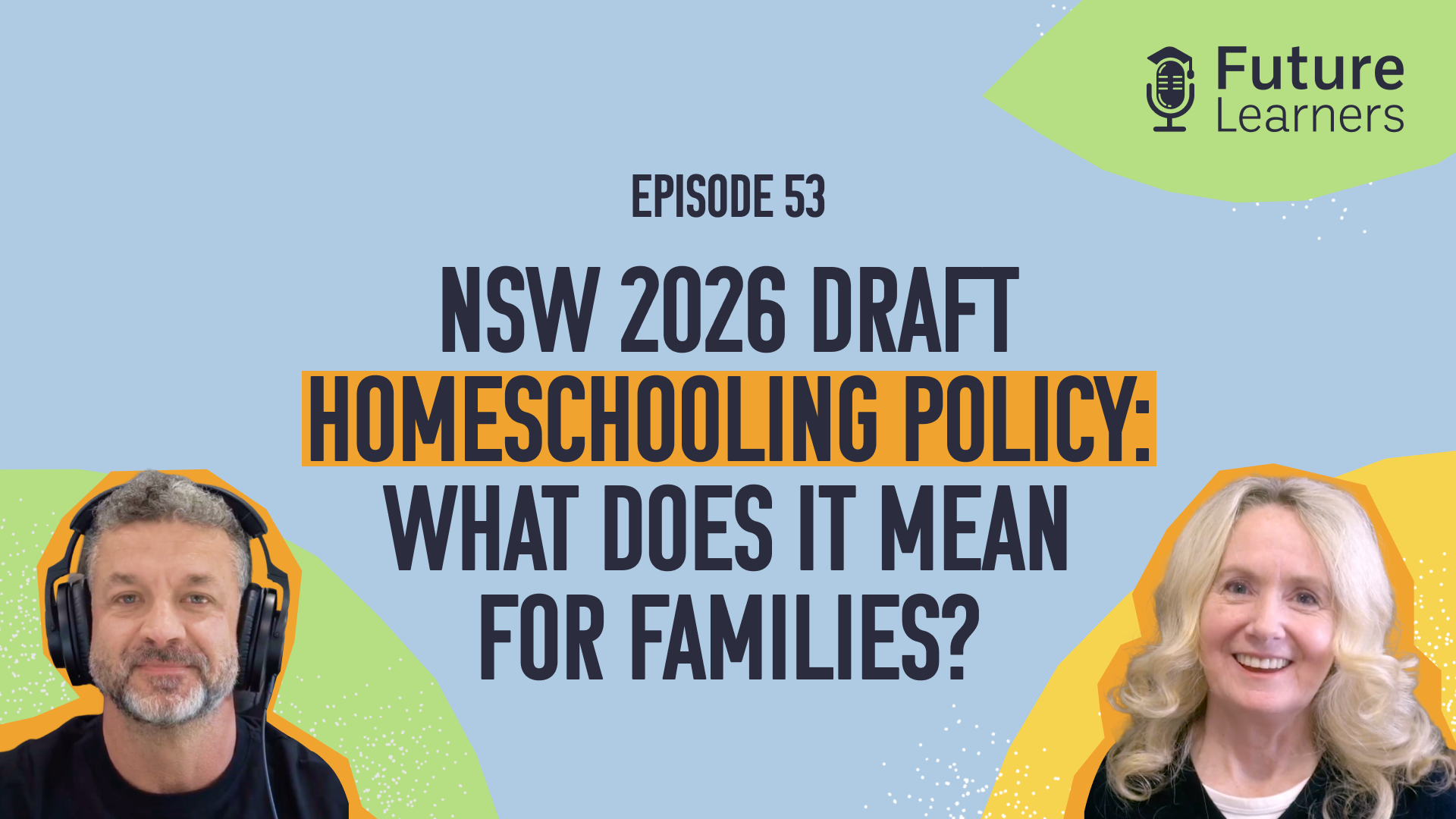
Episode 053
NSW 2026 draft homeschooling policy: What does it mean for families?
Episode 052
The Social and Academic Advantages of Homeschooling
Episode 051
You’re Not Alone: Finding Support on Your Homeschooling Journey
Episode 050
Do I need to be a teacher to homeschool?
Episode 049
The Real Benefits of Homeschooling: A Euka Graduate’s Honest Answer
Episode 048
Is Homeschooling Worth It? David’s Story of Homeschooling 3 Kids Over 8 Years
Episode 047
Preparing Your Children for the Real World: 6 Life Skills Homeschooling Can Teach
Episode 046
Starting Homeschooling Mid-Year in Grade 11 or 12: Senior Pathways Available at Euka
Episode 045
School Refusal in 2026: What It Really Is, and How to Help Your Child

Episode 044
Can I Start Homeschooling in the Middle of the School Year?
Episode 043
From School Bullying to Homeschooling Across 40 Countries as a Single Mum with 3 Daughters
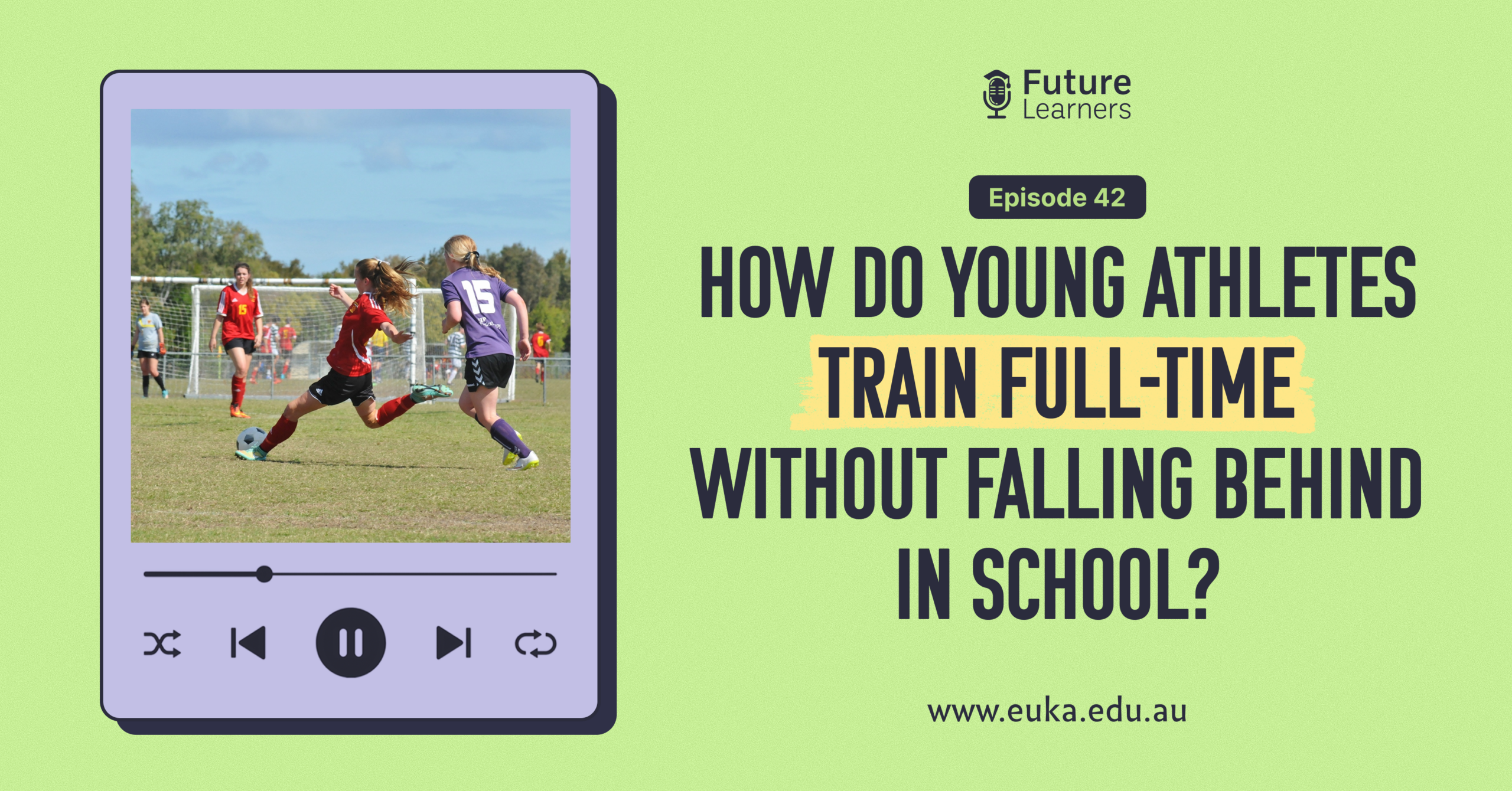
Episode 042
How Young Athletes Train Full-Time Without Falling Behind in School
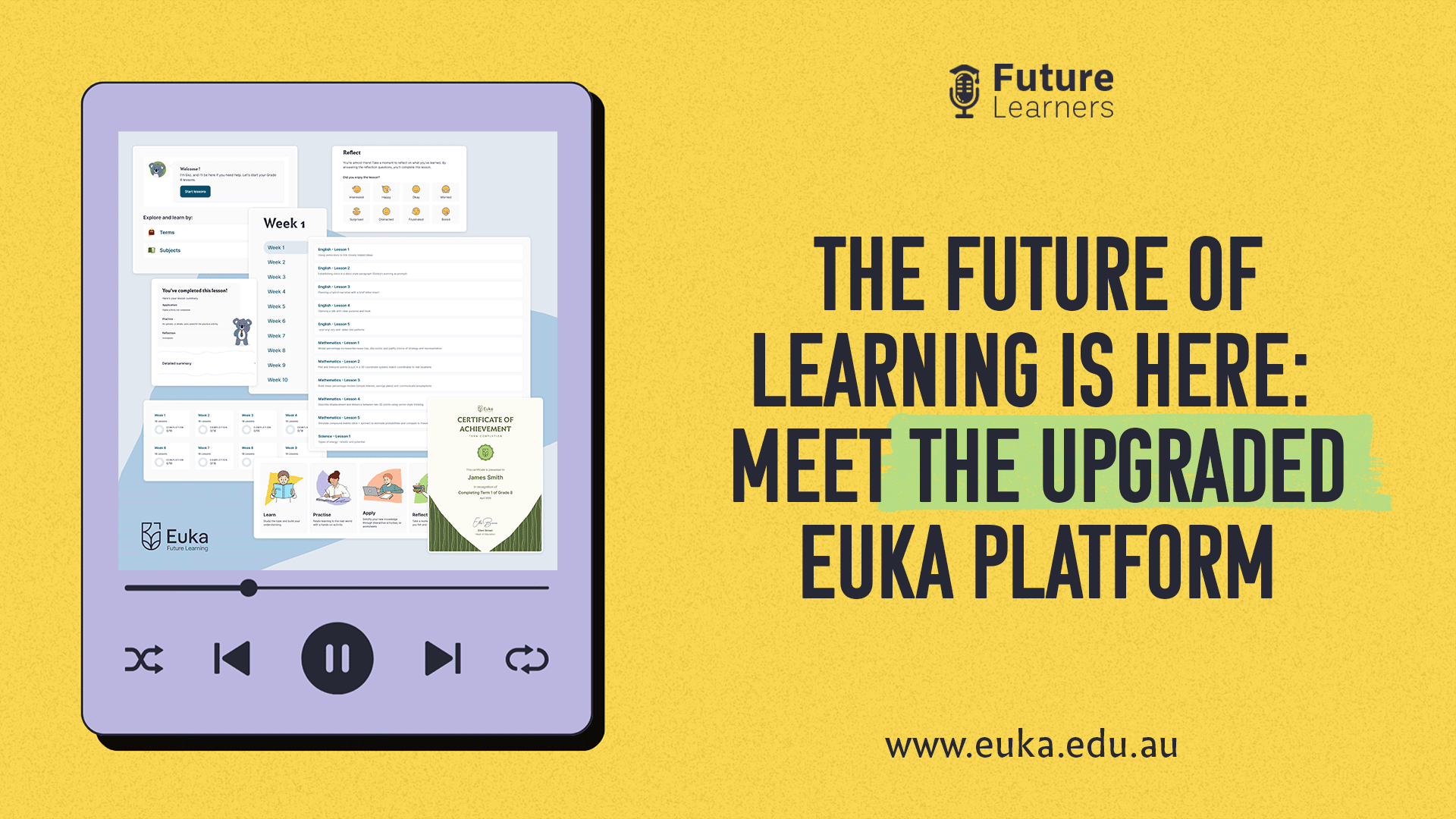
Episode 041
Meet the Upgraded Euka Learning Experience

Episode 040
The World Is Your Classroom: Travel Schooling with The Slow Road

Episode 039
Inside the NSW Homeschooling Audit: What It Means for Families

Episode 038
He earns 30K a year and homeschools

Episode 037
What you need to know about homeschooling in 2025

Episode 036
Is School Going “WOKE”?

Episode 035
The “True” Reasons families homeschool?

Episode 034
What you need to know about Registration and Reporting when Homeschooling

Episode 033
Travel Schooling: Everything you need to know

Episode 032
Raising young boys

Episode 031
Sleep! Are you and your kids getting enough?

Episode 030
Setting your pre-schooler up for success

Episode 029
Should children under 16 be banned from using social media?

Episode 028
Should children learn handwriting in this digital world?

Episode 027
The #1 Skill for children to learn

Episode 026
When should your child do work experience?

Episode 025
How to build a strong family unit

Episode 024
How to retain 90% of everything you learn!

Episode 023
Homeschooling with Dyslexia, ASD, and ADHD: A Mother’s Inspirational Journey

Episode 022
Unlock funding for homeschooling

Episode 021
Moving from School to Homeschooling in term 2

Episode 020
Homeschooling on a budget

Episode 019
The Importance of Raising Risk Takers

Episode 018
Empowering Girls: Building Confidence and Self-Esteem
Follow Euka on social platforms


Meet our hosts

Brett Campbell, CEO Euka Future Learning
Brett Campbell is a leader in education, serving as the CEO of Euka, an innovative company building the future of education. He’s a successful entrepreneur and author with a passion for lifelong learning. Beyond his professional achievements, Brett is a devoted family man and the host of the Future Learners Podcast, where he shares his ideas about education’s potential to empower people and create a brighter future.
Follow Brett on:


Ellen Brown, Founder Euka Future Learning
Ellen Brown is the founder and driving force behind Euka’s educational philosophy. With over 25 years of teaching experience, she designed Euka’s curriculum for grades 1-12, emphasizing individualized and practical learning. Her expertise is recognized by major media outlets, and she is frequently sought after for her insights on the future of education.