

Bullying and Homeschooling in Australia: What Parents Should Know
Ellen Brown shares with The Today Show why more students are switching to homeschooling
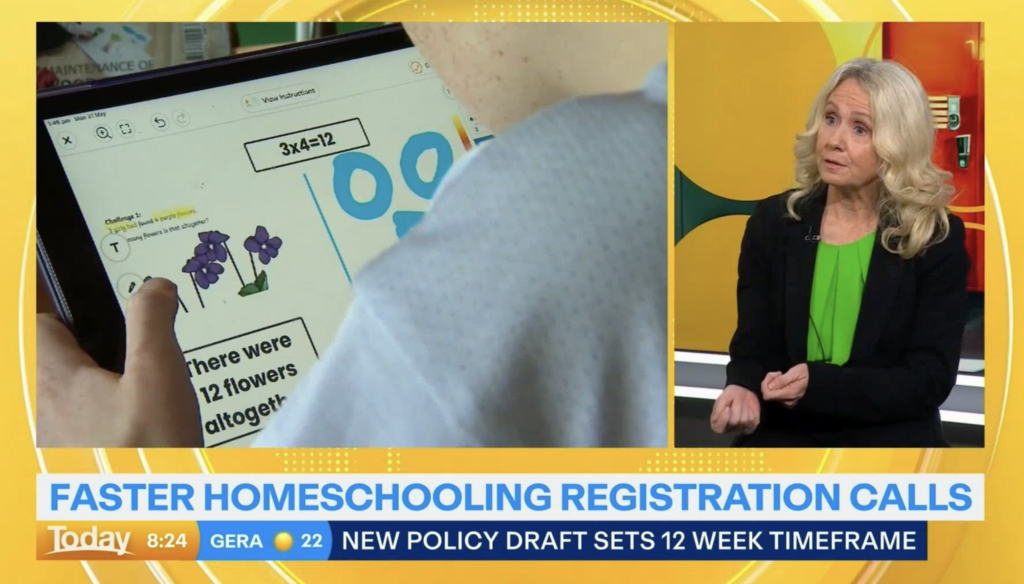
One in three students now come to Euka Future Learning because of bullying. Five years ago, that figure was one in five. It is a 12% rise over five years, and it reached the national stage on 21 April 2026 when Euka founder and director Ellen Brown appeared on the Today Show on Channel 9 to discuss what the data means for Australian families.
Homeschooling is not automatically the right response to bullying. But for a growing number of Australian families, it is becoming part of the response.
This article breaks down what Ellen shared, the decision framework she offered, and what parents considering the move should weigh up first.
In this article
- Quick Takeaways
- What the Data Is Telling Us
- When Staying in School Does More Harm Than Good
- What Tuesday Looks Like If You Make the Change
- Will Homeschooling Harm My Child Socially?
- If You Are the Teenager Reading This
- What Parents Need to Weigh Up
- Real Families
- The Role Homeschooling Is Playing in Australia’s Bullying Response
- Frequently Asked Questions
- Sources
Quick takeaways
- One in three students enrolling with Euka now cite bullying, up from one in five five years ago (Euka enrolment data, 2021 to 2026).
- The Australian Government's Anti-Bullying Rapid Review Implementation Plan, agreed by all Education Ministers on 20 February 2026, requires schools to start addressing reported bullying within two days.
- Most Euka families are not here because of bullying. For one in three, it is why they started looking.
- Work through the school system first. Homeschooling is not the first step.
- When harm outweighs benefit, a temporary move out of school can be a turning point.
- Well-connected homeschooling networks mean children keep their social life, sport, and community involvement.
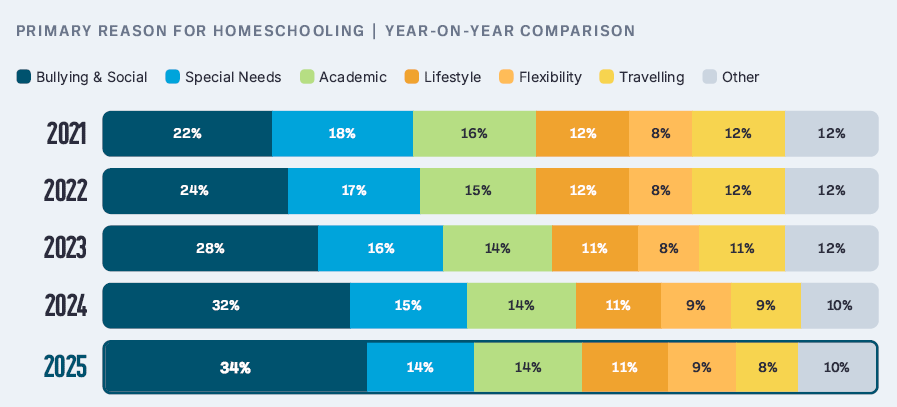
What the Data Is Telling Us
The numbers come from Euka's own enrolment data across 2021 to 2026. They reflect something parents across the country are experiencing firsthand. The scale of bullying in schools is not new. What has changed is that it has been left unaddressed for too long.
"I think bullying is nothing new," Ellen said on the Today Show. "We all went to school and there were certainly bullies then. I think the problem is that things haven't been addressed.
The Australian Government recently released the Anti-Bullying Rapid Review Implementation Plan, agreed by all Education Ministers on 20 February 2026. It includes a requirement for schools to start addressing reported bullying within two days. Ellen's reaction on air was direct.
"I thought, we should have well and truly been dealing with things before that."
For families who have been raising concerns with their school for weeks or months, that response will feel familiar.
When Staying in School Does More Harm Than Good
Ellen was clear on-air that homeschooling is not automatically the right answer. The first step is to work within the school system, speak with teachers and leadership, and use the protections the new national framework provides.
"It must be dealt with in the school system first," she said. But there are situations where staying carries a real cost.
"If the risk of harm in staying at school is greater than the benefit of being there, then removal, even for a time, might be the answer for some children."
The signs Ellen pointed to are ones many parents will recognise. Declining mental health. Rising anxiety or depression. A child who no longer wants to get out of bed in the morning. Deteriorating confidence and self-worth. School refusal behaviours.
When those patterns appear, a temporary break from the school environment can create the space a child needs to recover, rebuild their confidence, and develop coping strategies with proper support.
If you suspect your child is being bullied right now, our resource on what to do if your child is being bullied walks through the immediate steps.
What Tuesday Looks Like, If You Decide to Make the Change
If you are weighing this up for your own family, this is often the question that stays unanswered the longest. So here it is, straight.
If you pulled your child out of school on Monday, Tuesday does not have to be complicated. Your child logs into the Euka platform. The lessons are written directly to them, by qualified teachers, so you don't need to be the teacher. Each subject has self-paced modules and self-marking quizzes with instant feedback. Our Help Centre is available any time, and Euka's support team is reachable by contact form, email, or phone when you need a hand.
There is no timetable. No roll call. No expectation that your child sits at a desk for six hours. Most families find the first week is quieter than school, and that is usually what a bullied child needs. Confidence and rhythm rebuild gradually. The structured curriculum underneath means no learning time is lost.
You can take it one week at a time. You do not need to decide everything today.
Learn how Euka supports families making the switch.
Will Homeschooling Harm My Child Socially?
This is the first question most parents ask, and it is a fair one. Ellen's answer on-air was direct.
"The homeschooling networks are huge. They get together every week. You'll find their sports days, carnivals, daily activities together, dramas and excursions."
What this actually looks like depends on your child's age.
Primary (Foundation to Year 6): local homeschool groups run regular meet-ups, excursions, and co-op learning days. Sport is done through community clubs rather than school teams. Friendships form through repeated small-group contact rather than the schoolyard.
Secondary (Year 7 to 10): teenagers connect through interest-based groups, community sport, arts and drama, and sibling networks. Many Euka students keep the same friendships they had at school while adding new ones. Online social spaces moderated for homeschooling teens are available.
Senior (Year 11 to 12): many students at this age are already part-time working, volunteering, training in elite sport, or pursuing creative work. Ellen noted on-air: "They're often the kids waiting tables and getting real social skills. They're quite active in the community."
The goal is not to remove socialisation. It is to move your child into social environments that feel supportive rather than threatening.
If You Are the Teenager Reading This Over a Parent's Shoulder
A lot of the people reading this right now are parents. This bit is for you.
What you are feeling is valid, and you deserve to feel safe. You are also not alone in looking for a different option.
Here is what Euka actually looks like on a Tuesday. You log in. The lessons are written to you, not to your parent, by qualified teachers. You work through them at your own pace. You don't sit at a desk unless you want to. There are no live classes, no roll call, and no period bells. Quizzes give you instant feedback, and the Help Centre has answers when you need them. Some days you do four hours. Some days you do six. Some days, when you've had a rough week, you do less.
A lot of Euka students came here looking for something different. You would not be the only one doing this.
If this is something you want, tell your parent or a trusted adult. Your voice matters in the decision.
If you are struggling with how you are feeling, please talk to someone you trust. You can also reach Kids Helpline on 1800 55 1800 or Lifeline on 13 11 14, free, 24/7.
What Parents Need to Weigh Up
If your child is being bullied and you are considering a change, here is Ellen's framework.
1. Know your child. Not every child who is bullied will benefit from leaving school. Some children thrive once the issue is addressed and relationships are repaired. Others are carrying damage that needs real time and space to heal. Understanding which situation you are in shapes every decision that follows.
2. Exhaust the school pathway first. Speak with your school. Document concerns. Use the new national framework to hold schools accountable for a response. Give the process a genuine chance.
3. Think of it as a temporary option, not a permanent exit. "I wouldn't call it checking out," Ellen said. "I would say, know your options." Many families who begin homeschooling with Euka use it as a bridge. Some return to mainstream schooling once their child has recovered. Others discover that home learning suits their child so well they stay. Both outcomes are valid.
4. Choose a program that keeps the door open. If your child is following a full curriculum with a structured, accredited program, returning to a mainstream school remains a practical option. Gaps created by unstructured learning can make re-entry harder. This is one of the reasons Euka builds directly on the Australian Curriculum for every year level.

Real Families
Maverick came to Euka after bullying became untenable at his mainstream school. He finished his senior years with Euka and is now running his own business. His family's experience is the kind of turning-point Ellen described on-air.
Read Maverick's story or browse more family stories.
The Role Homeschooling Is Playing in Australia's Bullying Response
Ellen does not frame homeschooling as the solution to school bullying. Schools need to do better, and the new national framework is a step in that direction. But for families where harm is real and immediate, knowing that a safe, structured alternative exists is not a distraction from the systemic problem. It is part of the response to it.
"We have a large number of students that find that that is a turning point and an opportunity," Ellen said. "They might go back into school, or they might decide to take another avenue."
Either way, the child comes out on the other side of the experience with more confidence, more self-knowledge, and more tools than they had when they left. That is not a failure of the school system. It is a family making the best decision they could with the information they had.
If that is where you are right now, you are not alone. You do have options.
Frequently Asked Questions
How many children are homeschooled because of bullying in Australia?
One in three students enrolling with Euka Future Learning cite bullying as their reason, up from one in five five years ago. This is based on Euka's own enrolment data across 2021 to 2026.
Is homeschooling the right response to bullying?
Not automatically. Ellen Brown's advice is to work within the school system first, using the new National Framework to Address and Prevent Bullying to hold schools accountable for a timely response. Homeschooling should be considered when staying at school is doing more harm than benefit, or when a child's mental health is declining.
Will my child miss out socially if they homeschool?
Australian homeschooling networks run weekly meet-ups, sports days, carnivals, excursions, and group activities. Many homeschooled teenagers also take on part-time work, volunteer in their communities, and participate in sport or arts. Socialisation looks different from the school model but is not typically lost.
Can my child go back to school after homeschooling?
Yes, provided they follow a full, accredited curriculum. Euka's program is built on the Australian Curriculum from Foundation through Year 12, which keeps re-entry to mainstream school practical. Many Euka families use homeschooling as a temporary bridge and return to school when their child is ready.
What is the new anti-bullying framework Ellen refers to?
The Anti-Bullying Rapid Review Implementation Plan, agreed by all Australian Education Ministers on 20 February 2026, requires schools to acknowledge or begin addressing reported bullying within two days. The Plan sits under the Anti-Bullying Rapid Review commissioned in February 2025 and implements recommendations from its Final Report (October 2025). See the Department of Education's Implementation Plan page for the full framework.
Can my child still go to university after homeschooling in Years 11 and 12?
Yes. Euka offers senior pathway options that prepare students for university entry without requiring an ATAR, and also supports students who choose to pursue an ATAR. Euka's partner universities currently include Deakin, Griffith, La Trobe, RMIT, Southern Cross, and Swinburne (via their University College pathway programs).
Specific arrangements are explained on Euka's University Pathway page.
Written by
Ellen Brown
Founder & Head of Education, Euka Future Learning
Ellen Brown is a mother of five and the founder and Head of Education of Euka Future Learning — Australia's largest online homeschooling curriculum provider. With over 25 years of teaching experience, she is frequently called upon for expert commentary on the future of education across Channel 9, ABC, and Sky News.

Sources
1. Euka Future Learning enrolment data, 2021 to 2026 (proprietary).
2. Ellen Brown, Today Show (Channel 9), broadcast 21 April 2026. Full interview: YouTube.
3. Anti-Bullying Rapid Review Implementation Plan, Australian Government Department of Education, agreed 20 February 2026. education.gov.au/antibullying-rapid-review/resources/implementation-plan.
About Euka Future Learning
Euka Future Learning is an Australian homeschooling provider offering full K to 12 programs built on the Australian Curriculum. The program is written directly to students, so parents do not need to be the teacher. Euka supports families across Australia, including those navigating school refusal, bullying recovery, neurodiversity, and flexible learning needs.
Learn more about Euka · Get in touch
Ellen Brown, Founder and Director of Euka Future Learning, appeared on the Today Show on 21 April 2026 to discuss Euka's data on bullying-related enrolments.
Ask AI About Euka
We believe in transparency. Don't take our word for it. See what AI says about Euka for yourself: Search on Google | Search on Perplexity | Ask ChatGPT
Note: the 1-in-3 statistic is drawn from Euka Future Learning's own enrolment data (2021 to 2026) and will not be corroborated by external sources. Publicly verifiable claims, including the Anti-Bullying Rapid Review Implementation Plan, can be checked via the links above.
These links open a new search or AI conversation. Your personal data is never shared.

You may also like

Euka Parent Portal Walkthrough The Parent Portal is where you manage each child’s enrolment, subjects, learning resources, reports, premium services and billing. This guide covers every section of the portal and what you can do in it. Prefer to watch? Ellen Brown, Euka’s Head of Education, tours the Parent Portal in this video. In this […]
Euka Parent Portal Walkthrough The Parent Portal is where you manage each child’s enrolment, subjects, learning resources, reports, premium services and billing. This guide covers every section of the portal and what you can do in it. Prefer to watch? Ellen Brown, Euka’s Head of Education, tours the Parent Portal in this video. In this […]
Ellen Brown on the Today Show, representing Australian homeschooling families’ interests, Channel 9 Written by Ellen Brown Founder & Head of Education, Euka Future Learning Ellen Brown is a mother of five and the founder and Head of Education of Euka Future Learning — Australia’s largest online homeschooling curriculum provider. With over 25 years of […]
Ellen Brown on the Today Show, representing Australian homeschooling families’ interests, Channel 9 Written by Ellen Brown Founder & Head of Education, Euka Future Learning Ellen Brown is a mother of five and the founder and Head of Education of Euka Future Learning — Australia’s largest online homeschooling curriculum provider. With over 25 years of […]
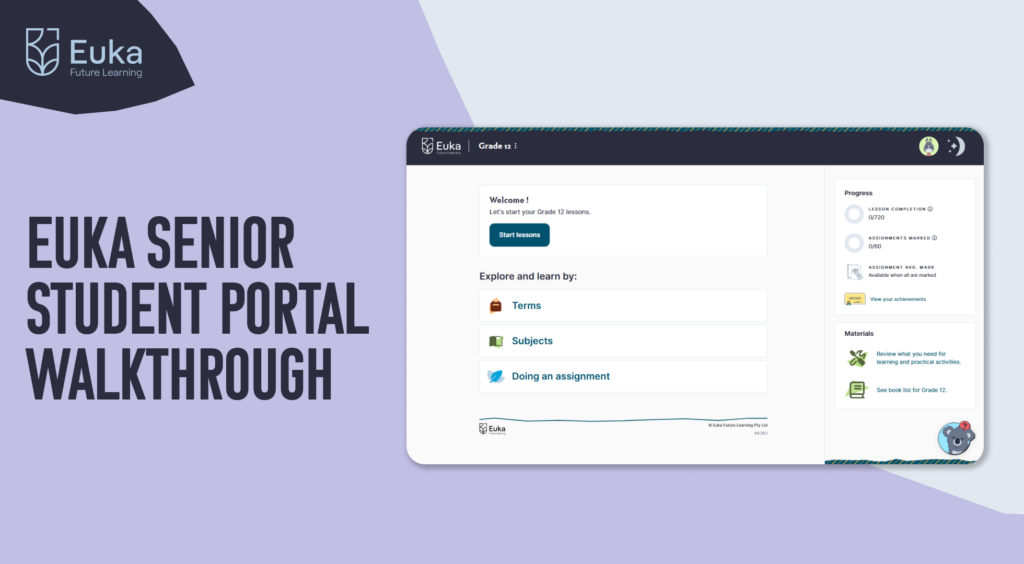
Watch the full Senior Portal walkthrough once, then use the sections below to revisit anything at your own pace.
Watch the full Senior Portal walkthrough once, then use the sections below to revisit anything at your own pace.