The World Is Your Classroom: Travel Schooling with The Slow Road | 40
Listen to this episode on

Watch this episode on

Listen to this episode on

About this episode
What happens when you swap the classroom for the open road? In this episode of the Future Learners podcast, we meet Kirianna from The Slow Road family, who shares how they balance education with adventure while living in a vintage 1962 Volkswagen Combi. Currently travelling in Japan with her husband Lockie and their three children, Kirianna offers a glimpse into the world of travel schooling.
Kirianna discusses their philosophy of “slow learning,” practical strategies for offline education, and how they integrate real-world experiences into their Euka curriculum. Her insights provide inspiration for families considering travel schooling or simply wanting to bring more flexibility and real-world connection into their homeschooling journey.
In this podcast
- Introduction to Travel Schooling
- The Slow Road Family and Their Journey
- Philosophy of Slow Learning
- Integrating Learning with Travel
- Offline Learning Strategies
- Living in a Small Space
- Travel Highlights and Cultural Experiences
- Support from Euka and Future Plans
- Key Insights for Families
- Your Family, Your Journey
Want to have a positive impact on thousands of families like you?
Leave us an audio question or share your homeschooling journey — anonymously if you like. Real questions from real families help us bring more value to every episode.

Key Points:
Travel Schooling Definition:
- Family of five travels in 1962 VW Combi "Izzy"
- Currently based in Japan; children aged 9, 6, and 3
Philosophy of Slow Learning:
- Taking things at life's pace; learning through play and exploration
- Flexible scheduling that works with each child's natural rhythms
Practical Strategies:
- Print worksheets and box resources by term for offline learning
- Integrate real-world experiences (markets, monuments, trains) into curriculum
Euka Support:
- Downloadable and printable resources suit travel lifestyle
- Responsive support team; YouTube tutorials for getting organised
Introduction to Travel Schooling
The world really can be your classroom. For Kirianna and her family of five, this isn't just a motto—it's their daily reality. Living in a vintage 1962 Volkswagen split-screen Combi named Izzy, they've discovered that learning doesn't need four walls. It just needs curiosity, flexibility, and the right support.
Currently in Japan with her husband Lockie and their three children—Riley (9), Alba (6), and Elsie (3)—Kirianna shared how they balance exploration with education, and why travel schooling has become their family's way of life.
The Slow Road Family and Their Journey
Kirianna and Lockie's journey into travel schooling wasn't always the plan. Both coming from aviation backgrounds, they'd always had the travel bug. They started travelling just before COVID, initially wanting to see more of Australia.
What began as an adventure evolved into something more permanent when they realised their son Riley needed an education approach that suited his active, outdoorsy nature. "We just tried to search for ways where we could educate him to be an outdoorsy boy, still get out and explore the world, but also have a stable homeschooling background," Kirianna explained.
Their research led them to Euka. The COVID pandemic, while challenging for many, actually helped normalise their lifestyle choice. "Everyone could see that kids could still be outdoors and learn, or still travel," Kirianna reflected. This shift in perspective gave them confidence to commit to travel schooling as a long-term approach.
| "Learning is just a part of life. We are all natural learners and enthusiastic learners." — Kirianna, The Slow Road |
Philosophy of Slow Learning
The family's approach centres on what Kirianna calls "slow learning"—a philosophy that extends beyond education into their entire lifestyle. Living in a vintage Combi naturally takes you back a few years, she notes. The family tries to live like they're back in the 1960s: getting muddy, learning through play, and connecting with different cultures.
"I think the slow aspect comes from just taking things as life can," Kirianna shared. "From a little boy, we figured that he just needed to take his time with his learning and really grasp his surroundings. That would build this foundation for him to grow and learn at his own pace."
This philosophy recognises that children—particularly active boys like Riley—often need flexibility. Rather than forcing extended periods of desk work, the family works with their children's natural rhythms. A morning worksheet, followed by time to run, swim, and explore, then returning to learning when energy has been expended and focus is restored.
Integrating Learning with Travel
One of the biggest questions families have about travel schooling is practical: how do you actually blend education with exploration? Kirianna shared how they make learning relevant by connecting it to real-world experiences.
When Alba had a geography worksheet about Cairns, she could draw on her experience of actually snorkelling there. In Japan, the children learn about currencies and money by using train cards and shopping at markets. They visit monuments like Tokyo's Sky Tree and connect those experiences to their Euka lessons.
"A lot of the times we will go on an excursion and somehow, without even realising it, it kind of falls into our Euka learning," Kirianna noted. This approach answers the question children naturally ask—"Why do I need to know this?"—immediately and tangibly.
| "Riley needs the flexibility to play and then come back. We see a lot more improvement from his behaviour when he's able to do that." — Kirianna, The Slow Road |
Offline Learning Strategies
What happens when you're crossing the Nullarbor or somewhere without internet? Preparation is key. "Everything that we have for a term is boxed up and put into packaging, so that we're ready in case we don't need to use our devices or have internet," Kirianna explained.
The family prints all worksheets ahead of time and accumulates hands-on materials and creative supplies—purchased from Japan's excellent dollar shops—that allow learning to continue anywhere. Riley, who learns best through hands-on activities, particularly benefits from this approach. "If he can do with Play-Doh and create something as he's learning, it sits better for him."
The children have containers with all their worksheets organised by subject, so they know exactly where everything is. "A lot of the times they don't even know that they're learning something because they're being creative," Kirianna noted.
Living in a Small Space
Life in a vintage Combi with three children requires creativity and intentionality. Yet Kirianna sees the constraints of small-space living as opportunities rather than limitations.
"I'm really lucky because the children have all grown up in a small space," she explained. The family has established clear boundaries: the caravan is for sleeping, while eating, playing, and learning happen outside. "Their playground is always out playing on the beach or at the front of the caravan."
This approach means outdoor learning becomes natural. Morning walks help children expend energy before quiet activities. Rainy days become opportunities for reading, colouring, and conversation. "Let's get out for a morning walk. Let's get out and let our energy burst. So that when we are cooped up, we can kind of have some quiet time."
Travel Highlights and Cultural Experiences
The family has travelled extensively, including time in Hawaii, throughout Australia, and multiple trips to Japan. Each destination offers unique learning opportunities that simply can't be replicated in a traditional classroom.
In Japan, the children navigate train systems with their own travel cards, learning mathematics through real transactions. They explore cultural landmarks and bring those experiences back to their curriculum work. "When they are sitting down to research or fill out their worksheets or learn something new given by Euka, they can kind of picture it and it makes sense to them."
Support from Euka and Future Plans
While travel schooling offers incredible flexibility, having solid educational support matters. Kirianna uses Euka to provide structure and ensure her children's learning aligns with curriculum expectations. The platform's flexibility—allowing resources to be downloaded and printed—makes it particularly suited to their lifestyle.
"Every time that we have needed any assistance or support, it's been very quick," Kirianna shared. She particularly appreciated the guidance available when first getting organised, including YouTube tutorials on how to set up filing systems. "I've never been without a folder. I've always been able to ask questions and seek help."The family has also written a book, The Slow Road Van Life, which shares their travel tips, recipes (Kirianna is a fire cook), destination recommendations, and insights into how they manage homeschooling on the road. It's available at bookstores throughout New Zealand and Australia, as well as on Amazon.
Key Insights for Families
Kirianna's experience highlights several truths that resonate with families exploring alternative education approaches:
Learning through play is essential, especially for younger children and active learners. Children don't need to sit still to absorb information—sometimes the opposite is true.
Flexibility leads to better engagement. When children can learn at their own pace and in their own way, they often exceed expectations. "If I was to just sit him there for two hours of English then maths, I wouldn't get the best out of him."
Real-life experiences enhance learning. Connecting curriculum to tangible experiences helps children understand why what they're learning matters—and makes it stick.You need less space than you think. With intentionality and organisation, education can happen anywhere—including a vintage Combi.
| "Riley needs the flexibility to play and then come back. We see a lot more improvement from his behaviour when he's able to do that." — Kirianna, The Slow Road |
Your Family, Your Journey
You don't need a vintage Combi or plans to travel the world to embrace the lessons from Kirianna's story. The core message is simple: learning is just a part of life. When we integrate education with our family's unique circumstances—whatever those may be—children thrive.
Whether you're travelling the world or doing your homeschooling at home, Euka is there to empower you and your family on your unique journey.
If you're curious about how homeschooling could work for your family, we're here to help you explore the possibilities. Your world really can be your classroom.

Transcript
Other episodes
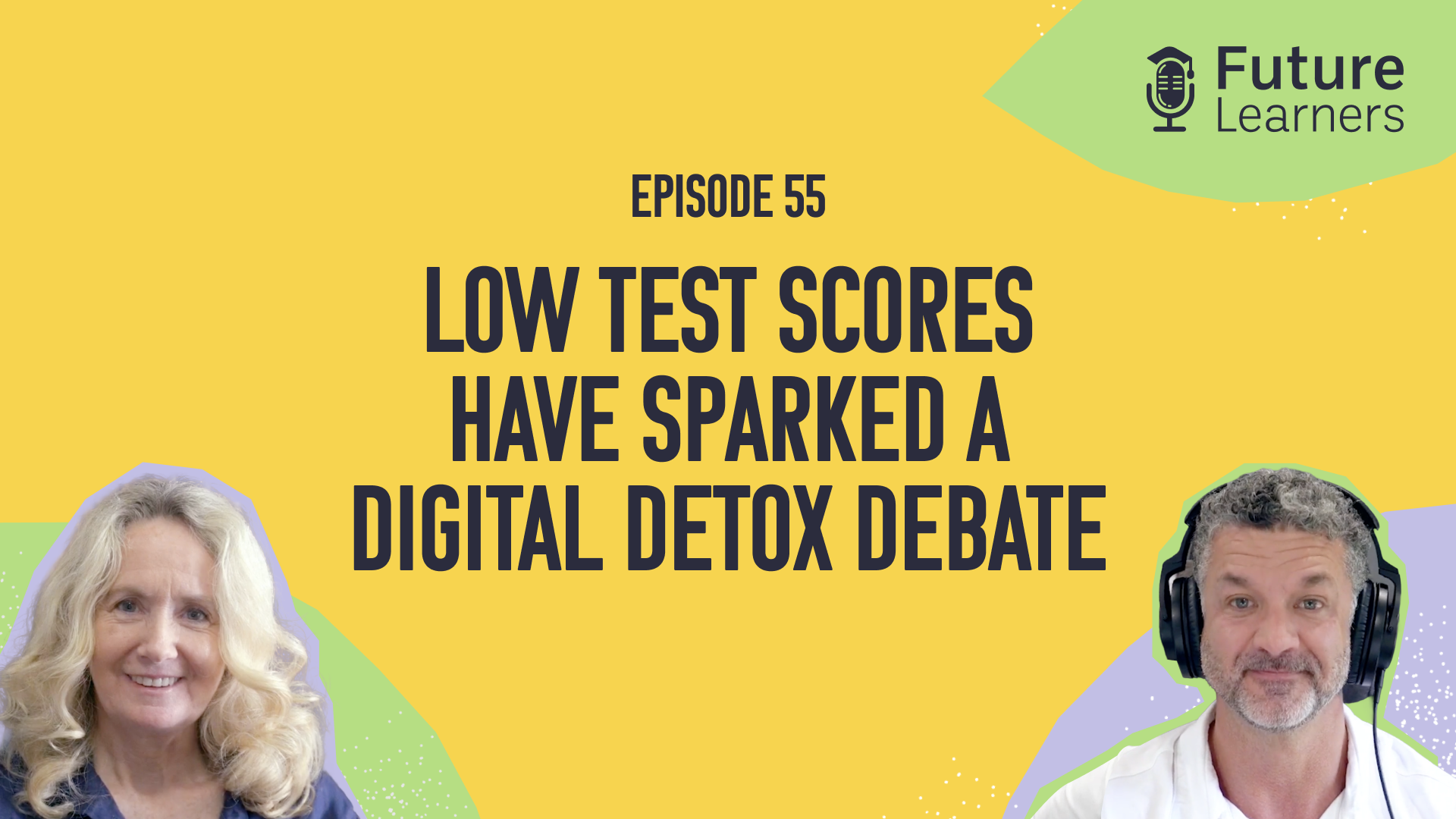
Episode 055
NAPLAN Results 2026: Is Screen Time to Blame?
Episode 054
Raising mentally healthy kids: What a psychologist wants you to know
Episode 053
NSW 2026 draft homeschooling policy: What does it mean for families?
Episode 052
The Social and Academic Advantages of Homeschooling
Episode 051
You’re Not Alone: Finding Support on Your Homeschooling Journey
Episode 050
Do I need to be a teacher to homeschool?
Episode 049
The Real Benefits of Homeschooling: A Euka Graduate’s Honest Answer
Episode 048
Is Homeschooling Worth It? David’s Story of Homeschooling 3 Kids Over 8 Years
Episode 047
Preparing Your Children for the Real World: 6 Life Skills Homeschooling Can Teach
Episode 046
Starting Homeschooling Mid-Year in Grade 11 or 12: Senior Pathways Available at Euka
Episode 045
School Refusal in 2026: What It Really Is, and How to Help Your Child
Episode 044
Can I Start Homeschooling in the Middle of the School Year?
Episode 043
From School Bullying to Homeschooling Across 40 Countries as a Single Mum with 3 Daughters
Episode 042
How Young Athletes Train Full-Time Without Falling Behind in School
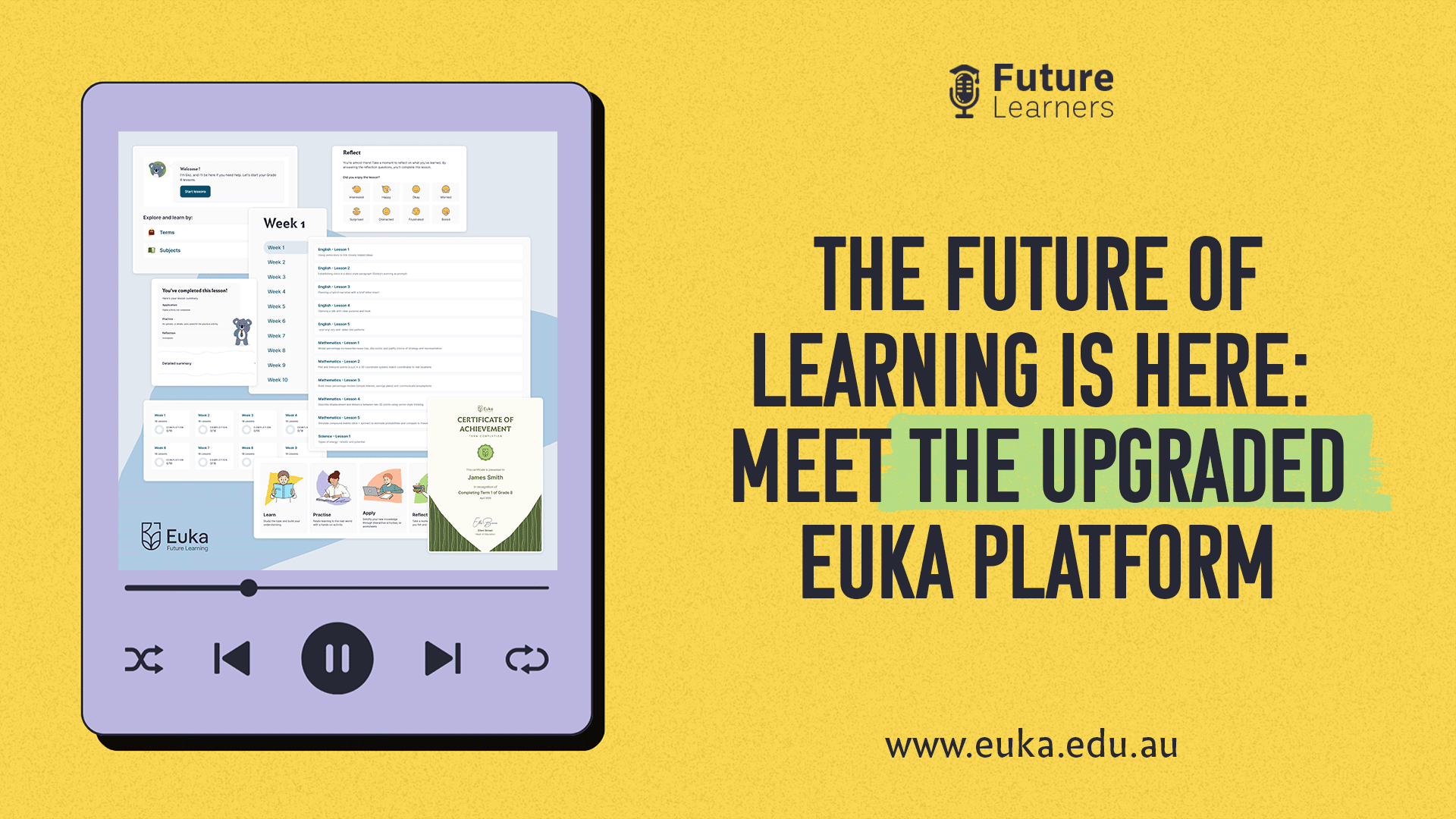
Episode 041
Meet the Upgraded Euka Learning Experience

Episode 040
The World Is Your Classroom: Travel Schooling with The Slow Road

Episode 039
Inside the NSW Homeschooling Audit: What It Means for Families

Episode 038
He earns 30K a year and homeschools

Episode 037
What you need to know about homeschooling in 2025

Episode 036
Is School Going “WOKE”?

Episode 035
The “True” Reasons families homeschool?

Episode 034
What you need to know about Registration and Reporting when Homeschooling

Episode 033
Travel Schooling: Everything you need to know

Episode 032
Raising young boys

Episode 031
Sleep! Are you and your kids getting enough?

Episode 030
Setting your pre-schooler up for success

Episode 029
Should children under 16 be banned from using social media?

Episode 028
Should children learn handwriting in this digital world?

Episode 027
The #1 Skill for children to learn

Episode 026
When should your child do work experience?

Episode 025
How to build a strong family unit

Episode 024
How to retain 90% of everything you learn!

Episode 023
Homeschooling with Dyslexia, ASD, and ADHD: A Mother’s Inspirational Journey

Episode 022
Unlock funding for homeschooling

Episode 021
Moving from School to Homeschooling in term 2

Episode 020
Homeschooling on a budget
Follow Euka on social platforms


Meet our hosts

Brett Campbell, CEO Euka Future Learning
Brett Campbell is a leader in education, serving as the CEO of Euka, an innovative company building the future of education. He’s a successful entrepreneur and author with a passion for lifelong learning. Beyond his professional achievements, Brett is a devoted family man and the host of the Future Learners Podcast, where he shares his ideas about education’s potential to empower people and create a brighter future.
Follow Brett on:


Ellen Brown, Founder Euka Future Learning
Ellen Brown is the founder and driving force behind Euka’s educational philosophy. With over 25 years of teaching experience, she designed Euka’s curriculum for grades 1-12, emphasizing individualized and practical learning. Her expertise is recognized by major media outlets, and she is frequently sought after for her insights on the future of education.