
School Refusal in Australia: A Parent’s Guide to Options
Written by
Ellen Brown
Founder & Head of Education, Euka Future Learning
Ellen Brown is a mother of five and the founder and Head of Education of Euka Future Learning — Australia’s largest online homeschooling curriculum provider. With over 25 years of teaching experience, she is frequently called upon for expert commentary on the future of education across Channel 9, ABC, and Sky News.

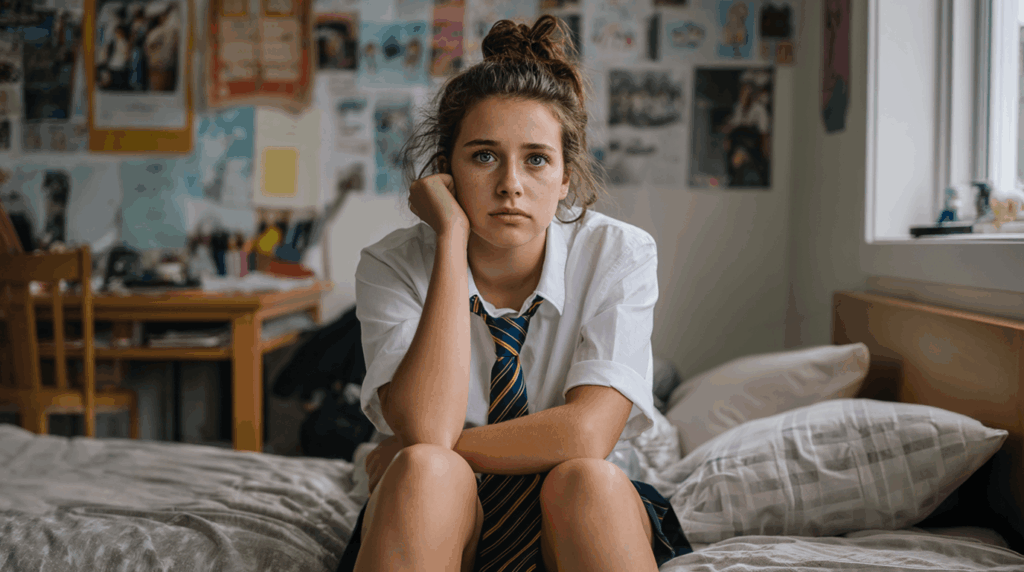
If your child is refusing to go to school, you already know how exhausting and heartbreaking it can be. The morning tears, the stomach aches, the meltdowns at the front gate — and the quiet, nagging worry that you’re doing something wrong.
You’re not. And you’re not alone.
School refusal is one of the most common reasons Australian families begin exploring education alternatives — and it’s a signal worth taking seriously. This guide walks you through what school refusal actually is, why it happens, and the practical options available to your family right now.
School Refusal at a Glance
- Affects an estimated 1–5% of all school-age children (Fremont, 2003; Royal Children’s Hospital Foundation)
- Rates have increased since the COVID-19 pandemic, prompting an Australian Senate Inquiry in 2023
- Not the same as truancy — driven by emotional distress, not defiance
- Increasingly referred to as “school can’t” to reflect that non-attendance is not a choice
- Legal education alternatives (home education, distance education, online schooling) exist in every Australian state and territory
- Home education registration is available in all jurisdictions
In this article
Understanding School Refusal
What Is School Refusal?
School refusal — sometimes called school avoidance, school can’t, or emotionally-based school non-attendance (EBSNA) — describes a pattern where a child finds it extremely difficult or impossible to attend school, despite parents and school staff trying to help.
It’s different from truancy. Children experiencing school refusal are not choosing to skip school for fun. They’re overwhelmed — by anxiety, social pressure, sensory overload, academic stress, or a combination of all of these.
As the Australian Senate Inquiry concluded, school refusal “has a profound effect on young people’s health and wellbeing, their sense of self-worth, their connection to friends and family, and their aspirations for life beyond school.”
Common signs include:
- Persistent reluctance or outright refusal to leave for school
- Physical symptoms — stomach aches, headaches, nausea — that ease once school is off the table
- Intense emotional distress on school mornings (crying, rage, shutdown, panic attacks)
- Repeated requests to stay home, or escalating school absences
- A child who seems fine on weekends but deteriorates on Sunday nights
- Reports of bullying, friendship breakdowns, or feeling unsafe or excluded
If any of this sounds familiar, trust your instincts. School refusal rarely resolves by itself — and it’s a sign your child needs something different.
Why Does School Refusal Happen?
There’s rarely one single cause. School refusal tends to develop when a child’s emotional capacity is overwhelmed by their environment. Some of the most common underlying drivers include:
Anxiety and mental health
Generalised anxiety, social anxiety, and separation anxiety are among the leading causes of school refusal in Australia. For many children, the school environment — crowded hallways, unexpected social situations, performance pressure — can feel genuinely threatening.
Bullying and social difficulties
Whether it’s overt bullying, exclusion, or ongoing friendship conflict, social pain is one of the most powerful drivers of school avoidance. Children often struggle to articulate what’s happening — they just know school doesn’t feel safe.
Neurodevelopmental differences
Children with ADHD, autism, dyslexia, or sensory processing differences often find traditional school environments genuinely difficult to navigate. When the environment doesn't accommodate how they learn, distress is a natural and valid response. For these children, a neuro-affirming approach to education one that works with their cognitive style rather than against it can make the difference between daily distress and genuine learning.
Academic pressure and falling behind
When a child has fallen behind their peers — or feels like they can never quite keep up — the classroom can become a place of daily shame. Avoidance becomes a way of protecting their sense of self.
What Should You Do If Your Child Is Refusing School?
The first step is to take it seriously — not as a behaviour to fix, but as a signal to understand. Here’s a starting point:
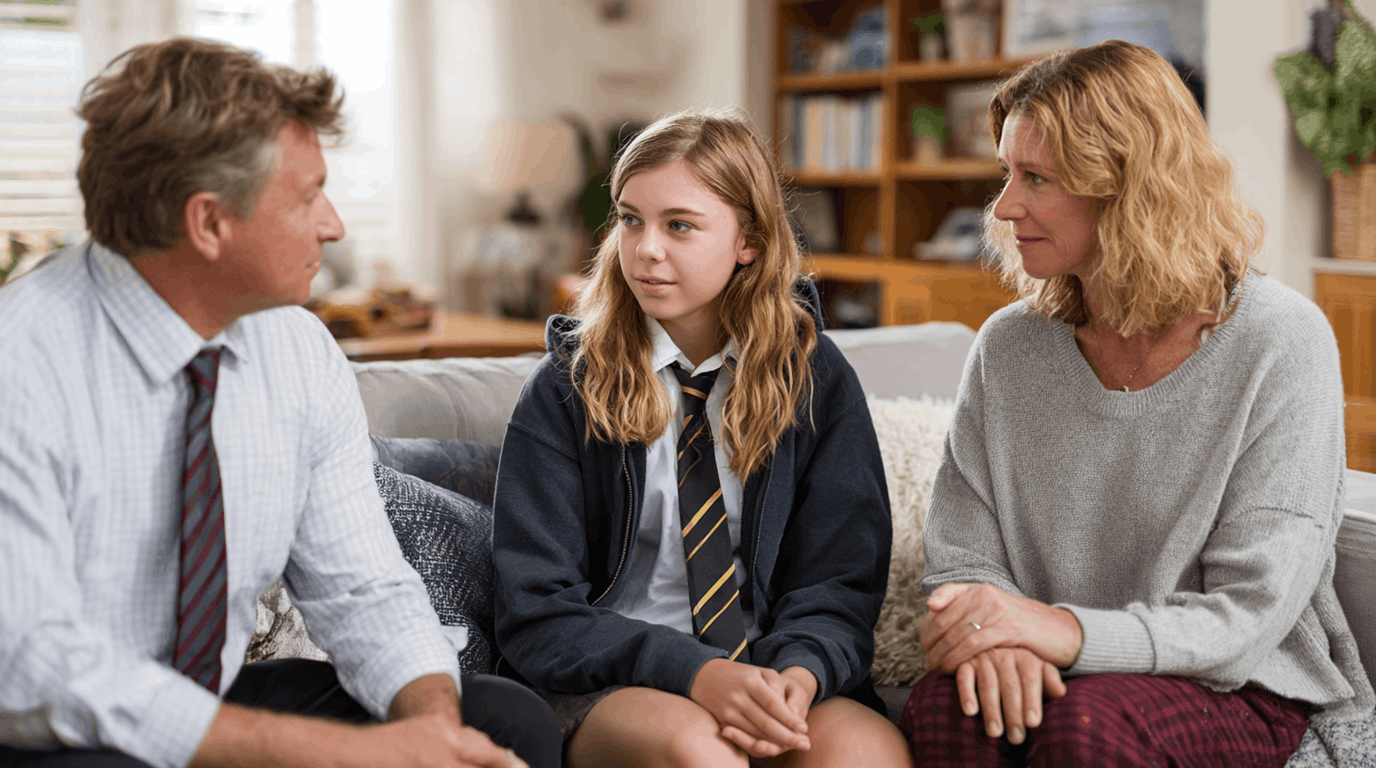
- Talk with your child — without pressure. Ask open questions. Avoid “why won’t you just go?” Try “what’s the hardest part of the day for you?”
- Speak with your GP or a mental health professional. A paediatrician, child psychologist, or school counsellor can help identify underlying anxiety, trauma, or neurodevelopmental needs.
- Contact the school. Let them know what’s happening. Ask about what support they can offer — flexible attendance, a safe room, adjusted expectations.
- Explore your legal obligations. Each Australian state and territory has its own rules around compulsory schooling and approved alternatives. Home education or distance education may be a legal and supported pathway.
- Consider whether the environment is the problem. Sometimes the issue isn’t the child — it’s the mismatch between their needs and the current setting.
Education Options for Australian Families
Traditional school isn’t the only way. When it stops working for your child, you have real choices — and in Australia, those choices are well-supported.
Home education (homeschooling)
Home education is legal in every Australian state and territory, and registration requirements vary by location. Parents take responsibility for their child’s education, following a curriculum that suits their child’s needs, pace, and learning style. For children with school refusal, homeschooling can provide an immediate sense of safety and relief — and the chance to rebuild confidence in learning. You can read how other families have navigated this transition on our Family Stories page.
Online schooling programs
Online curriculum programs give families the structure of a school timetable without the school environment. Your child can work through lessons independently, at their own pace, from home. Programs like Euka Future Learning are built on the Australian Curriculum and designed for flexibility — so your child can learn at a time and pace that works for them, without the social and environmental pressures that triggered refusal in the first place.
Distance education through your state or territory
Government-funded distance education is available in all states and territories, though access and eligibility criteria vary. In some states, families need documented evidence of need (such as geographic remoteness or medical reasons) to enrol.
Gradual school re-entry
In some cases — particularly where anxiety is the primary driver — a gradual return plan developed with a psychologist and the school can be effective. This works best when the school environment itself is not the core problem. The Royal Children’s Hospital In2School program is one example of an evidence-based supported re-entry model.
How Euka Supports Families Through School Refusal
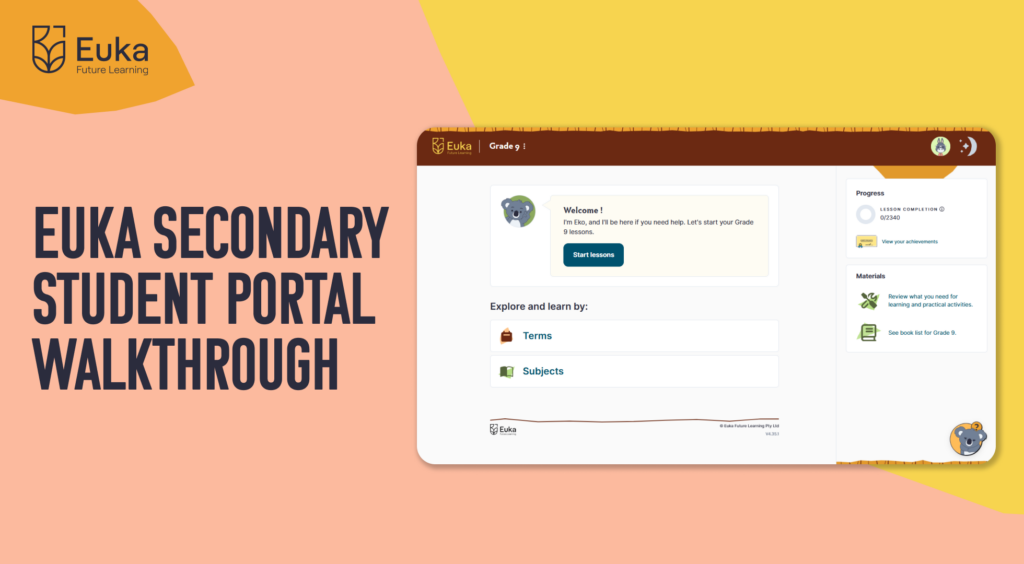
Euka Future Learning was built for families in exactly this situation. Our program offers:
- A fully online, self-paced curriculum covering Foundation through to Grade 12 — built on the Australian Curriculum
- Lessons written and reviewed by qualified teachers, with clear structure and no classroom pressure
- The flexibility to start at any time of year and study at whatever hours suit your child and family
- A Parent Portal so you can stay across your child’s progress and support them without needing a teaching degree
- Optional Registration Service if you’re homeschooling for the first time and navigating your state’s requirements
- For older students, a Senior Secondary pathway with assessed credentials recognised by partner universities including Deakin, Griffith, La Trobe, RMIT, Southern Cross, and Swinburne — so choosing to leave school doesn’t mean closing the door to university
For many families, switching to Euka isn’t a last resort — it’s the reset their child needed. When the environment changes, so can everything else: the meltdowns ease, the confidence comes back, and learning starts to feel possible again.
Frequently Asked Questions
You Have More Options Than You Think
If your child is refusing school, it doesn’t mean they’ve given up on learning — or that you have to. It means the current environment isn’t working for them, and that something needs to change.
The good news is that in Australia, you have real, supported, legally recognised alternatives. Whether that’s home education, an online program, or a combination of both — you get to choose what’s right for your family.
Your child can still build a great future. Sometimes they just need a different path to get there.
Ready to explore a different path?
Euka Future Learning is a flexible, Australian Curriculum-aligned online program designed for families who need something that truly fits. No classrooms, no pressure — just learning that works.


You may also like
Ellen Brown on the Today Show, representing Australian homeschooling families’ interests, Channel 9 Written by Ellen Brown Founder & Head of Education, Euka Future Learning Ellen Brown is a mother of five and the founder and Head of Education of Euka Future Learning — Australia’s largest online homeschooling curriculum provider. With over 25 years of […]
Ellen Brown on the Today Show, representing Australian homeschooling families’ interests, Channel 9 Written by Ellen Brown Founder & Head of Education, Euka Future Learning Ellen Brown is a mother of five and the founder and Head of Education of Euka Future Learning — Australia’s largest online homeschooling curriculum provider. With over 25 years of […]
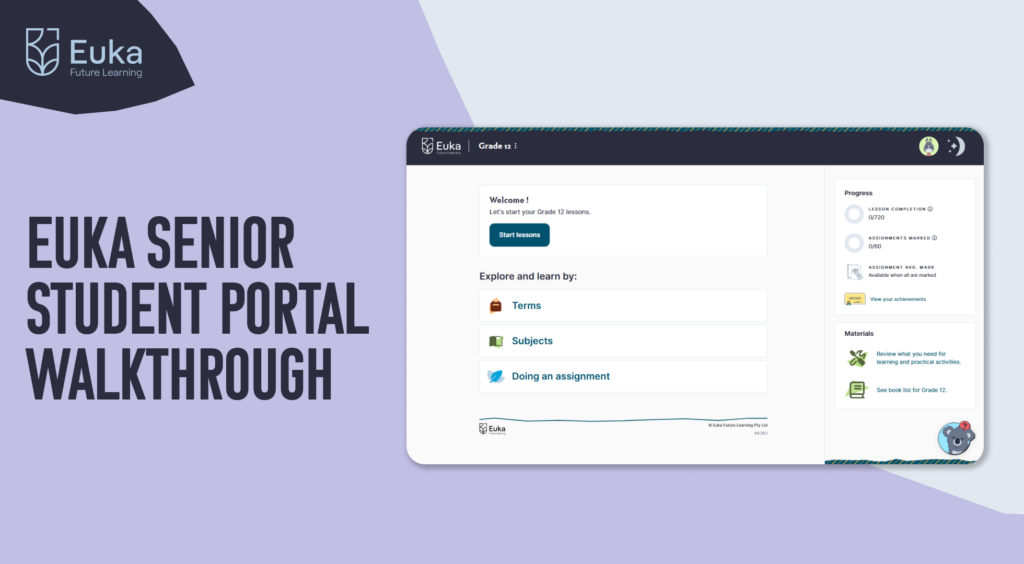
Watch the full Senior Portal walkthrough once, then use the sections below to revisit anything at your own pace.
Watch the full Senior Portal walkthrough once, then use the sections below to revisit anything at your own pace.