Brett:
Hello and welcome to another episode of Future Learners. I am your host, Brett Campbell, co founder and CEO of Euka Future Learning. I’m joined by my co founder and head of education and my esteemed co host, Ellen Brown. How are you doing today, Ellen?
Ellen:
Very well, thanks, Brett.
Brett:
You’re wearing a beautiful colour green, what would we call, I was just gonna say jumper, but it’s not a jumper ’cause that’s poor language. What would you say, what would you class that?
Ellen:
A pullover.
Brett:
Shirt. A shirt? Yeah. Like a nice long sleeve shirt. Anyway. For those who are listening, you got no idea what I’m talking about. But I like the green. I’m a fan for the colour green. Anyway, before I derail this podcast, before we get started, super excited about today’s topic, Ellen. You’ll hear me talk about, and obviously yourself as well, but in all of our podcast episodes, and I guess the reason why Euka exists to be fair in many ways is for the end outcome of what we’re about to talk about today, meaning preparing our children for the real world. I’ll put air quotes around that because what is the real world? And the world’s ever evolving and it’s changing rapidly. And as we move into this AI infused world that we’re moving into and accelerating into, actually, to be fair, there are significant changes that have occurred in the last several months, several years. But if you understand anything about exponentials, over the next three years, we’re going to see more change in the next three years than we have in the last, our entire lifetimes, to be fair, for many of us, in the last decades of decades of decades. And it’s not going to slow down, right? It’s going to keep increasing. It’s going to start evolving. And I know I don’t want that to sound like a doomsday approach because that’s actually a very exciting opportunity and a very exciting world that we’re going to be moving into. But as a parent, it can be daunting, right? I’ve had lots of conversations with parents where they’re like, my gosh, I don’t even know what to do to prepare my child for this world, because the world in which we grew up in was a little bit slower and things weren’t changing as frequently. And the way in which we were sort of brought up was the same way our parents were brought up and grandparents were brought up. And it was almost that compounding effect of that. Now we’re living in a world where my grandchildren, which I don’t have yet, but I know my grandchildren wouldn’t even understand the world that I grew up in. So the reason why Euka exists is to make sure that, one, we’re not just preparing or providing an education for students, is the education in which we are providing is preparing them for the real world. So I know we’ve got a few points that we want to tackle today and go through, but before we do, Ellen, any sort of thoughts that you want to add to this topic of conversation?
Ellen:
Yes, absolutely. Sometimes we think about homeschooling as education and we think about education as curriculum. But the world that our students are going into isn’t a world where facts and figures and things like that are going to be the thing that they need to take with them to become successful in their future. So it’s about looking outside of the curriculum. And how do we prepare students in the way they think, how they think, rather than the what they think, which is what I had to do when I was at school.
Brett:
Yeah, which feeds into the way in which even Euka itself, or homeschooling in general, is created, because there’s this huge, when I grew up of course, there was this huge thing around memorisation, right? ‘Cause you needed to memorise something so you could pass the test. So you could pass the test to be seen that you had a result, which that result then put you into an environment where you either sunk or swum. And if you passed your tests because you got good memory, but you end up in a workforce and you don’t remember anything you’ve learned, you’re back to square one. And if anything, that hill to climb is much, much harder than it is if you actually took the framework of, I’m actually learning here so I can retain this knowledge so then I can be better equipped for whatever it is that I move into next. So let’s go through the points. We’ve got six key points that we want to talk about today and cover. And as we do this, this topic of the Future Learners podcast is about preparing your children for the real world. There’s lots of other elements that can be considered here. And we could probably come up with six hundred and sixty-six different reasons of what we could be doing. But we want to try and tie this into as much relevance as it relates to sort of education, and as we go through, we’ll be able to highlight some key distinct areas that Euka does in order to prepare our students here. So let’s roll into point number one. We’ve got financial literacy and entrepreneurship. Obviously a topic, Ellen, that probably one of my favourite topics to be fair out of all of this. I think there’s nothing better than preparing your child for a world of possible independence and the ability to be able to make something of what they want. So let’s talk to point number one.
Ellen:
Yeah, so the first point is probably where we kind of start with this. In grade seven and grade eight, we do business studies. And business studies from the curriculum will be learning how a business works. But what Euka does is we go one step further and we have kids starting their own businesses. And each week they’ll be taking a time to look at different parts of our business. One week it’ll be marketing and the next it’ll be learning about budgets and really working through what it means to actually have a business. And it’s really interesting, especially when you hop on our Facebook page from time to time, families will post posts of kids that have started business. And I talked to a parent just yesterday actually whose daughter’s in grade seven and she’s got a cat breeding program. She breeds ragdolls, but all of the learning that she’s doing in her grade seven business subject she’s actually using in her little business she’s running from home.
Brett:
Mm-hmm. And when we talk about entrepreneurship, I just want to be very cautious here as well. And for those parents who are like, you’re not entrepreneurial, which is totally fine here. We’re not saying everyone needs to go out and build your own business or you need to go and create your own life, et cetera, because I don’t believe that is even applicable to everyone, right? But the lessons and learnings that you can gather from entrepreneurship, whether you go out and build your own business, having your child set up their own lemonade stand, right? The typical thing that you would do, or having your child just engaging in commerce to understand how things work. So, my daughter’s five. Every time we go to Woolworths, and this is a tip that I encourage parents to try and do, but I know it can sometimes be a very laborious, slow concept and you want to get in and out of a shop as quick as you can. But for example, again, I’m not saying, okay, Ayla, we’re gonna do entrepreneurship here. This is more of an umbrella of topic of conversation, but I’m teaching her about money. I’m teaching her about, she’s scanning the items every time an item comes through. And I can hear parents now going, there’s no way I want to do this. But you don’t need to do it all the time, just every so often, right? Especially not a whole grocery shop. But if you go pick up four or five items, let them scan it, let them understand a barcode. Why is the barcode here? Well, every item in this shop does this, et cetera, et cetera. And where do the items come? Well, it comes from trucks, and so you can start to really help shape how the world works. Because you’ll be so surprised how many kids don’t know how anything works in the world, right? It’s like the food just turns up on your plate. It’s not magic. Mum had to cook it or dad had to cook it, or we got takeaway, or there’s a whole world of how these things function. And what you’ll quickly find is, especially kids who are curious, and I believe every child is curious to a degree, and it’s us parents at times, and it’s hard because it’s a fine line, but you don’t want to be answering every question your child asks all the time because it’s like, my gosh. My daughter, I think, and I know she takes after me because she asks a million questions on everything, right? I was just lucky as a kid, when I got told to stop asking questions I just kept asking questions. But be very cautious around when we’re asking our kids questions, well, I don’t remember, and we’re trying to dismiss that, because you’ll remove their curiosity. And curiosity is when they start finding out about how the world sort of operates and functions. And that’s a key part of this entrepreneurial thinking, right? And when we talk about financial literacy, literacy, I need to go back to school and do my speech, but knowing how money works, knowing that 20 cents isn’t better than a two dollar, but twenty cents is a bigger coin, right? Explaining the value of things is such an important piece. And it can start at that very, very early age as well. But obviously as kids go through, where we sort of start to create that interception of entrepreneurship in grade seven and eight and then into more financial literacy in grade, I got it that time, Ellen, in grade nine and ten, knowing what a budget is. Knowing how, we’ve got this much money that goes to here, we’ve got power bill, we’ve got these outsourced, kids can often think, I thought my parents had unlimited money when we were kids. We didn’t grow up with much, but I had no concept of, why can’t I have that? My friend has that. Why can’t we buy that? It’s different, right? It’s not just everyone gets the same amount of money and this is how it parcels itself out. So such a valuable piece. And even for parents, I encourage lots of my friends and so forth who do this. It’s like, go on the financial literacy journey with your child if you haven’t been exposed to it yourself. A lot of adults don’t truly know how economics work and how the world financially functions, right? So there’s lots of learning and it’s such an exciting topic. You don’t have to be a numbers person, you don’t have to be like, I’m not an accountant, so there’s no way I need to understand finances. No, understanding a budget, and then knowing that you’re gonna set goals and targets to work towards something, and then you encompass that and you work, and now all of a sudden that TV or that Xbox or that scooter that your child wants, they know that that cost $120 and that took them 10 hours of their hard labour, or 20 hours, whatever you want to pay your kid, right? The best possession I’ve ever purchased in my life was a $400 19-inch big box TV when I was 16 years old. And that was because my mum said, I’ll pay for half of it for your birthday. You have to come up with the other half. And I was like, well, I need to come up with $200, that’s easy. Had no idea what money was, really. I understood it, but I was like, that just means I’ve got to go and get a job. I get to do a paper run at $4.30 an hour. I’m like, my god, that’s a lot of paper runs I’ve got to do, a lot of hours to make that money up, right? So when you start to purchase things yourself where you feel like you have worked for it, that is where financial literacy starts to become something, because you start to pay attention. When you pay, you pay attention. Right. If it’s gifted, there’s ways to make it still gifted, but make it feel like they have earned it. Right. So here’s a fun little thing, and I’m hijacking this point here because I love it, but I’ll stop in a minute, Ellen. One thing I do with Ayla is every day when she completes her lessons, here’s what we’re doing. Every day, there’s a dollar. You get a dollar. I mean, look, I’m not breaking the bank there, but there’s a dollar, and that dollar has value. She knows what she can buy right now for a dollar at Woolworths. Right? Because that’s all she’s buying. Or she knows that she needs to do this many days to go and get that one toy she wants because the toy’s nineteen dollars. Starting to get the value of what something means versus, here’s another toy, here’s another toy, and she’s got no concept. And it’s like, why can’t I have that? Why can’t I have that? So when people pay, they pay attention. So anyway, point number two. You wanna keep, yep. There you go.
Ellen:
Well, before we finish point number one. In the financial literacy program that Euka puts into grade nine and ten, all those things that we say now as adults looking back, like, why don’t people teach us that? Things about tax. What is tax? What does it mean when you want to buy a car? What happens with that kind of thing? And so it’s that real practical financial literacy that, I guess we all take for granted, and then of course when you’re a young person you’ve got no idea. So we just really take the time to make sure that we answer those questions about what does it actually mean to make money, to use money in the world around them. So that’s all put into that grade nine and ten financial literacy program.
Brett:
Yep. When we understand how the world works, you have a different perspective on many things. So very, very valuable point. All right. The next point, this is a huge one as well. I think I’m gonna say this for every point, but preparing your children for the real world, how do we do that? So, developing independent thinkers. It’s a big one. Love that.
Ellen:
Yeah. It starts right from our foundation program. When you normally have school, let’s say you’ve got a teacher telling the children all the information, and often parents will go, we’ll try textbooks, and then they’ve got the textbook and then they’re telling the student all the information. It’s really has always been important to Euka that the lessons are written to the student. They need to feel ownership over their learning in order to develop their own independence. And their own feelings of ownership, that those lessons, right from little, even when they can’t read, they are written to the student themselves. So that’s the first way we do that. The other thing that we do is we make sure we’ve got plenty of practical activities, because while a student’s using their hands, they’ve learned some information and they’re using their hands to do something practical with that information, that’s where their understanding of that information isn’t, there’s no boundary around that. We’re not telling them what they need to know or learn. We’re giving them the opportunity to try new things with their hands and to develop their thinking in that way as well. And the final way I would say within the Euka lessons is, right in the introduction to our lessons, you’ll see this section that says why this lesson matters. In order to be an independent thinker, you need to be able to see value in what you’re learning and how you’re thinking. And so taking the time for us in the introduction to make sure a student actually sees the relevance of what they’re learning is really important as well before they even start a lesson.
Brett:
Yeah. A lot of child psychological literature really highlights the fact that you don’t want to be the provider of all answers and doing of things for your children, because it actually creates an unprepared person for the real world, as we’ll call it. For example, one of my friends when we’re teenagers, I go over to his house after school, and again, we were brought up very differently. We went and sat on the lounge. Actually, it was two lazy boys, so recliner seats. We went and sat on it. His mum comes in, hey guys, would you like any food? And I’m like, my god, we were treated almost like kings. And I’m like, what, okay, cool, we’re watching TV. He puts his bag on the floor, I’m like, you’re not even putting your bag away. I would have got in trouble for that. Like I’m comparing. Obviously, as you grow up, you compare how someone lives versus someone else. And then, she’s doing all the folding of the washing. Lovely woman. Salt of the earth, would do anything for anyone, right? And obviously she derived a lot of value in being able to provide that, right? So this isn’t no knockback on anyone who does this at all, to be fair. But the point I’m making is, we went down to his bedroom and she’s in there putting his clothes in his drawers. And I’m like, we’re about 15, 16 years old. And I’m like, wow, your mum even puts your clothes in your drawers for you. Now, my mum washed my clothes, but I had to put them away. So here I was just comparing, right? All these different things. And when he moved out, he didn’t move out till he’s like 25. I was out at about 19, I think I moved out the first time, or 20. And he was so unprepared for the world. He had no idea how to even look after a household. He had no idea how to cook food. He’d eaten out of, I’m just like, looking back now, yeah, you weren’t prepared for it. And sometimes as a parent, and especially mothers in general, and this is because mothers care so deeply about those things, it’s the nurturing side of it, is sometimes you have to take the harder path and go, you know what, anything that your child can do, you should probably get them to try it and do it and practice it and know that, hey, I’m not, yeah. This is what my mum used to say to me in her terms is, I’m not your slave, right? I think that’s an old school one, but I never truly understood it until I got a bit older. I’m like, wow, because I was very prepared for the real world. I was very prepared to be independent and so forth as I was sort of progressing into these situations, even down to the point where when I was younger, I was doing homework and I’d be sitting in the lounge, and I’m like, mum, how do you spell this word? She’d yell back, look in the dictionary. I’m like, you just said words there, you could have spelt it out in the quicker amount of time. Like I was looking for the path of least resistance, right? Which is what I do in everyday life. I’m always looking for, is there a better, quicker, easier path? But sometimes when you meet resistance and friction, that is where the lesson, that’s where an independent thinker is highly valued. And I could tell, as a business person myself, and we’ve, I’ve hired hundreds of people over the years across the board, and the people that I’m looking for now to join, and I’m talking to all my friends and so forth who have businesses, one of the key traits that we’re really looking for is, can this person independently think? Can they work autonomously by themselves? Or do they need hand holding and fact checking, or just quality assurance on every single thing they do? Because that’s not a valuable trait or a high level of skill set that you want to bring into the real world, right? You need to be able to, yeah, again, sort of fend for yourself almost in some cases, right? And it’s our responsibilities as parents, and I’ll speak personally for myself, I take it on board that it’s my responsibility to, there’s nothing more than I want to do than give every single thing I possibly can to my kids. But let me reframe this. Giving someone a bike because I can is different than, do they value that bike? And have they learnt the lesson around the bike so that they don’t then expect, where’s my next upgrade on my bike? When’s my bike coming? Because the older a child gets, if they’ve formed this mentality of, it’s given to me, given to me, given to me, and there’s no other prerequisites that come with it, they will become entitled. Right? They will become a lot more entitled and they will expect. And you’re like, why is my child like that? It’s like, well, probably because we’ve been providing. Because there’s ways to give everything to your child. The key thing you’ve got to really ask yourself is, what do you really want to give them? Do you want to give them a tangible thing, or do you want them to understand and be prepared for the real world? Which again is what we’re really talking about. So, independent thinkers. Absolutely hands down is such a critical thing to be able to build in their character. Okay, next point, Ellen. Building, this is another good one, I told you I’m gonna do this for all of these. Building self-awareness and reflection. Such a big personal trait.
Ellen:
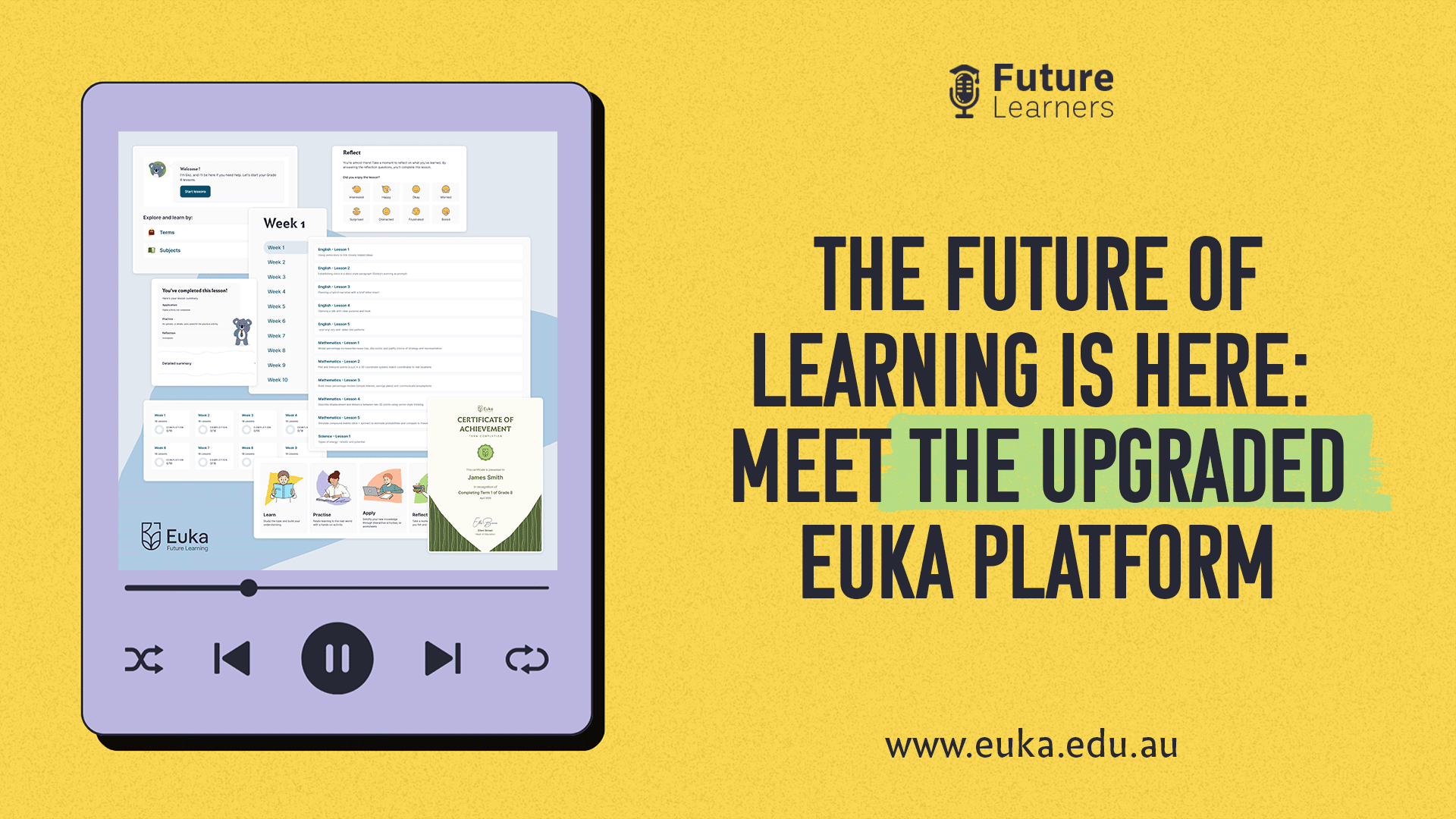
Yeah. Yes. I think one of the joys of homeschooling, this kind of blends the last point with this point as well. One of the joys of homeschooling is that you actually have a bit more time. Like pace is a really interesting one. And I do see friends that have got kids in school, and they’ll go to school and then they’ve got soccer training after school and then they’ve got dance class with this one, running, running, running. Here’s your food and off to bed. I’ve forgotten the homework and there’s a project. So when you’re homeschooling, everything’s slowed down. So you’ve got the opportunity to be able to think about things like how to help them be independent and what wins you can give them. And this whole thing about reflecting on their learning, how they’re feeling about what they’re doing in their lessons. And so I would say as a parent, I love that I’ve been able to spend the time with my kids to be able to ask them how they’re feeling about what they’re learning. And sometimes they’ll say, I’m really loving this subject, or I’m really loving this other subject, and they want to spend more time at it. So that’s one of the things about the Euka program that allows them to actually be reflecting on their learning and spend more time on areas that they love. On the program as well, they have the opportunity to follow where they’re going as far as achievements. So we have certificates that they can get every term, and then a certificate that means they’ve covered the year. But one thing I love is there’s this little, I don’t know what you call it, an icon that fills up as they’re doing their lessons. Now, as a parent, you don’t have to come in there and go, have you done this? And I’m talking about when they’re getting a little bit older, but giving them a bit more opportunity to be aware about how much have they got to do in a week, organising their own timetables can be really helpful. Reflecting on, last week we didn’t actually get all our lessons done, why not? How can we change that moving forward? So they’re actually being engaged in writing, putting their own timetable together. They can see their achievements, and get them themselves, as they finish a particular term, they’ve done all their lessons and they’re ready to download an achievement certificate, get them to do that because it gives them a sense of pride. The other thing that we also do in the Euka program is we have an upload section after the practical activity, and that is really fantastic because if they have worked really hard and they’ve built a diorama or they’ve created a poster or whatever it is that they’ve been doing, having them upload a picture of that means that they can go back and reflect on that later on, and develops a sense of pride in what they’ve completed. You don’t necessarily see that in grade 10 boys at school. A pride in what they’re doing. And I think it’s really important because, unless you, if you’re spending time doing something, unless you’ve actually got that time to reflect and actually feel proud about what you’re doing, then you’re not really investing yourself into it. So being able to upload a picture of something can be really helpful. And the other thing that I would say is important in our program is, at the end of every lesson is a reflection section where they might just talk about, they’ve got to pick an icon. And it might be that they’re happy, frustrated, bored, whatever it might be. But even just taking the time to go, well, how did I feel when I was learning my maths today? And if they have picked their feeling frustrated a couple of times in the maths, it actually makes them click and go, okay, this is something I can actually work on. Do I need to change my level of maths? Do I need to spend more time in it? So it’s not just information for the parent, it’s about getting them to think of themselves as learners and reflect on their learning experience and improve it, because that’s the kind of thing they’ll take on into the workforce. How did I go today at work? I felt frustrated. What can I do tomorrow so that I can improve that? So it’s not just about getting through the Euka program and getting through the year. It’s about developing these skills and helping them to want to better themselves.
Brett:
Yeah. Yeah, exactly. And I’ll add to that, the overarching umbrella for this is how to build emotional intelligence, right? And self awareness is one of those compounds of emotional intelligence. It’s sort of that foundation of being aware of how you feel, or how you are progressing, or how you are moving forward. And then that leads into the concept of self regulation, of teaching your children how to actually, one, first of all, understand how you’re feeling, and then, how do I regulate that? Like when I get frustrated, how does that physically come out? Does your child stamp their feet? Do they just get frustrated? Do they go recluse, they don’t talk, they don’t want to share, they just put it in the too hard basket, do they run around the house? Whatever the emotion is from that is really important, because again, when you come into the real world and you have to build the world that you are hoping, 90% of your success is going to come from how you as a human being show up, right? It’s not so much now the skills or how good you are or how intelligent you are per se from an IQ level. This EQ is so important, especially moving into this very fast AI resulted world where you almost don’t need to remember anything now. Like every answer you’re ever gonna want is at your fingertips in seconds, right? Our ability as humans to be able to interact with other humans as well, right? And understand what motivates you. What are the things that get you excited? Take check of that, right? A tip that you could possibly roll out with your child is, at the end of every day, you just have a check-in and go, okay, here’s five questions we’re gonna ask ourselves today. How did we go? How were our emotions? Where did we feel this? What did we do when we did that? Were you happy with that reaction? Would you prefer to act in a different way? So it’s really just sitting down and doing the work, right? It’s doing the work, because it’s so easy not to do, right? So every night when I put Ayla to bed, Brody’s a bit too little to do this. All he does right now is say dad, dad, dad, dad. So pretty excited about that. Ellen, his first word was dad. Emily’s not so much, because Ayla’s first word was dad. I think because dad just is an easy word to say, right? But one thing that I do, and again, my daughter’s only five, right, and
Ellen:
Yeah.
Brett:
sometimes she doesn’t like this exercise, it’s quite funny. So we’ll be in bed. One of the first things we do before I tell her a story, a make up a story, is, what are we grateful for today? Right? A very simple thing to do. And you will see what your child was actually grateful for. And it’s a very big indicator, because you’re, geez, you were grateful for that. Like one morning she goes, I was grateful that you come out and we did XYZ. I’m like, God, I should probably do that more, right? So it’s easy as a parent to be going through the day and not sort of recognising those things that really uplift or motivate your child, or bring joy to your child. So having the conversation go, what were you grateful for today? Not only that, there’s some times where she’s like, I was grateful for nothing today, Dad. I’m like, okay. All right, maybe we could try again. Instead of going, no, you should be grateful for this because remember we did that and you should do that. That’s forcing gratitude down someone’s throat and they will not appreciate that. So I’ll then go, okay, well, here’s what I’m grateful for today. And I’ll be like, I’m grateful for this to happen. I’m grateful, and super small things as well, right? Like, I’m grateful that we had food on our table today because we had a beautiful dinner. Mum worked really hard and she cooked that for us, and she’s, yeah, I’m grateful for that too. So a lot of this that we’re talking about here, and again, especially in the younger years, but even as our children are getting older, is we have such a huge opportunity to lead from the front. Right. Be the change that we want to see. And as parents, we can set the standard, we can set the tone for that. So a few extra things there that we, we have done podcasts before on emotional intelligence, and feel free to go dive through the Future Learners archives. They’re always time friendly, those episodes, because they’re timeless skills that we can learn and adopt. But all right, Ellen, next one. We’ve got creating space for real world experiences. Creating space. Let’s talk about that.
Ellen:
This is probably the thing that got me most into homeschooling, because I really love spending time with my kids. Like they’re great people. I think the more time you spend with them, the greater they are, because they’re people that you can relate to, I suppose. But when they were little, volunteering with something is just such a fantastic opportunity. So when they were little, we did meals on wheels together. And so we would go and pick up the meals that were cooked at the hospital kitchen. And we would do our circuit, it was once a fortnight we’d do our circuit, and I’m telling you, it was a bit like Halloween because every one of the elderly people would be there with a Freddo frog or something for the kids, because they would expect them coming. But I can’t tell you how many times a message would come back to us saying, it was a highlight of my day, to see the little ones. But what the kids got out of that was seeing where people live, how much just spending a few minutes talking to somebody can mean to someone, they’d have an old person in tears or someone who’s been hurt or someone who was sick or all kinds of things that they got to talk through, and really feel as though they were doing something for others, which, when they’re little, the world is about themselves. So being able to give them the opportunity to volunteer, you don’t get that when you’re at school. So I love that part about homeschooling. Another one that jumps into my mind. Obviously, when we talk about real-world experiences, we think about work experience. And my kids have tried everything and loved trying everything. But it’s the little experiences that time gives you. Like one of my boys was really into pulling things apart. And we would go down to the tip. They have a little space in the tip where they have some things that they just give away that aren’t quite dead yet. And honestly, you pull apart everything. Nothing ever went back together. I love those things where people go, you pull it apart and create something. No, no, you just create a mess. But it really was something he loved doing and he just got so much enjoyment from finding all the little bits inside and all that kind of thing. So it’s that time to develop things, like he has got an inquisitive mind. And even though he’s gone on to do other things in his life, that would have planted some seeds into him about curiosity. So
Brett:
Yeah. Yeah.
Ellen:
the time to involve yourself and your family in the world around you is really valuable.
Brett:
Yeah, and it allows the child to scratch the itch without it compounding internally without knowing an answer. Meaning, I think I wanted to be 15 different things as I was sort of growing up. And I didn’t get to experience all of them, but the ones that I thought I wanted to be that I got to experience, after doing some work experience or after exploring it a little bit further in my extracurricular time. Yeah, I thought I wanted to be a world class athlete, right? So I was very sporting, and I grew up in New Zealand. I love rugby league. I love rugby. I love cricket. I love golf. I loved all sports. And I was naturally, luckily, I was naturally gifted at all of them. And I was like, I want to be an All Black, but I also want to play for the New Zealand cricket team. And I also want to play for the New Zealand Kiwis. And then I realised that I could never break through, because I couldn’t give it the rot, like I was always on the cusp. I’d make a rep team, but I’d never get to the next level of that, because I didn’t know why. And I had friends who were professional athletes. I’m like, the difference between me and them is they’re training hours and hours a week, and I didn’t train. I just showed up to play the sport. So it taught me that you have to put a lot of groundwork in. You can’t just show up, Brett, and you’re going to be there based off your natural ability, because your natural ability will only get you so far. Putting yourself in real world experiences quickly shines a spotlight on where your areas of opportunity lie. So I love that concept about, sometimes to learn how to swim, you just have to be pushed into the pool. It’s that sink or swim type of mentality. Now, this is no way, shape or form recommending you push your child into a pool. However, in many cases, the metaphor of that is, sometimes you’ve just gotta put them out there for them to experience it. You could try and prep your child as much as you possibly can for something, and you could theoretically talk to them about it, talk to them about it, but you’re never gonna prep your child for what heartbreak is when their first love leaves them. Right? Like, you have to feel that. That’s a visceral thing that you don’t know unless it’s ever happened. My mum used to tell me all the time, don’t touch the electric fence, don’t touch the electric fence, you’ll get a shock. I’m like, yeah. So I went and grabbed it. Idiot. I never touched an electric fence ever again. So I’m like, my goodness. Now why didn’t I just listen to my mum? Right? Why didn’t I? Practically, I probably should have. But sometimes we just have to learn those experiences. So our ability to create those spaces and opportunities for our children is a massive win there as well. A lot of kids are great at sport, or they are amazing singers, or they are, fill in the gap. They are great artists and they could go on to be one of the best, but they haven’t had that extra breadth of breathing space to explore it further or really go deep in it. So pay close attention to those things that your children are obsessed about, because there’s something in it. Right now you might go, my god, he’s obsessed about this game on the Xbox. But what specifically about that game is it that they’re obsessed about? There’ll be things in it that you’re like, that’s telling a clue. There was a game called Sim City and Lemmings back when I was a kid. And what Lemmings was, was, it had a whole group of little miniature people, and each of them had a different skill set, right? And they would go and build things and do things. I just love building, but I never liked all the other shooting games and other games that my friends liked. I like these games that were involved in building cities and building things. And looking back now, my gosh, I’m a builder. I love to build things, right? I just love to see things being built. So there’s clues in what our kids are doing right now that, as parents, if we were able to sort of step out and go, I wonder why they actually like that. Do you even know why your kid likes the game? Have you sat down and asked them and said, hey, why do you enjoy doing this? Or why do you enjoy riding horses? Or why do you enjoy running around in the bush? What about it? Because there’s clues in that, right? They might not have it fully formulated, but there’ll be something in there that you could pull a thread on and find out so much more. So that’s a great one. All right, we’ve got two more, Ellen. Point five, connecting learning to the real world. Let’s go a little bit deeper on that one.
Ellen:
Yes, so, a memory I have when I first met my first homeschooling teenager, and it was interesting because I was at a picnic, I’d never met a homeschooler before. My children were actually really small, like two, three and four years old, the younger ones. And I said, do you want to spray some Aerogard on? She says, no thanks, I don’t like to rub poison on myself. And I thought, what? But the thing that stood out to me was she went on to talk about how she felt about environmental issues, and she talked about what she knew was going on in the local council, and I thought, what? And it wasn’t that she was, it was more about the fact that she had a sense of self and an understanding around the world that was going on around her. And it really set in motion for me that desire that, that I can have conversations about, my goodness, the local community centre’s closed down because there wasn’t enough volunteers there. Why is the council not putting any funding towards that? So all of a sudden now I’ve got eighteen, nineteen, twenty year olds who are interested in what’s happening in the political world. Like they’re part of what’s going on. And quite often, I think it’s really discouraging in this day and age to see young people who have no concept of what’s going on. They’ve got a vote. They don’t care. And I think it’s one of those wonderful things about homeschooling, that opportunity to actually live in the real world. Because there is something about being in school that cocoons them in a space where they’re disjointed from what’s happening in the world. And I guess that’s one of the things that I really love about homeschooling.
Brett:
Yeah, this one sort of ties in. There’s a couple of the prerequisites, right, which is developing independent thinkers and building self-awareness. Those two are so critical when it comes to this component here about connecting learning to the real world. Because what I thought learning was growing up is, you sit and watch the news every night and you see what the news tells you, and this is what’s happening in the world. But then as you get older and wiser and you become an independent thinker and a critical thinker and more of a self aware person, you’re like, hold on a minute, something here doesn’t really make sense. And not everything the news says is true. Or you go to a doctor. Like growing up, I thought a doctor knew everything about the human body until I actually met a doctor that actually knew a lot more than my other doctor. I’m like, I’ve just been prescribed this. As a kid, anytime I’d get sick, it was the same thing every single time. This is crazy. How can you diagnose me in three minutes and you write a script and I’m out. And I’m like, so then you start thinking, actually, doctors don’t know everything. They’re human as well. And they know a lot of stuff about stuff, right? And so now I can’t just rely heavily on this one person’s piece of advice. And so that’s why being a critical independent thinker is so important, because you can’t just go, my dad knows everything, or my mum knows everything, right? That’s certainly not what it is, even though we may portray, yeah, of course, we know these things. But very, very important when you connect it to the real world, right? Knowing and teaching your children that there are specific people with specific outcomes. And again, this is sort of age appropriate, of course, but understanding that the global issues is not what you just see on your local news channel. It’s the ability, okay, here’s how I would approach that. You’ve heard this one piece of information here. What is the opposing view look like? And this is a very, very good activity to do, is you always look at the steel man of the other side of the concept. So it’s like, okay, so there’s one person who says this. There is always an opposing side. So you’re gonna go, well, isn’t that weird? Like, why is there an opposing side for everything? Because that’s how the universe works, and you’re never gonna get equilibrium to be fair, unless the balance sort of comes together. But if you look at that and you go, okay, well, there’s this person saying this, that person saying that. What’s the truth? There’s always three elements of the truth. There’s yours, and somewhere in the middle, right, the truth sits somewhere in between that. And we’re gonna be naturally governed and guided by our own beliefs as we do grow up, right, and that’s important. But teaching your child that beliefs can change when new evidence is presented. Being able to be fluid and not rigid and dogmatic on your thinking is a very, very important skill to bring into the big wide world. Because when you get locked on your opinion, no matter what is said, there will be people who just, I can’t fathom knowing there to be something different that I’m not even gonna be going down that path. I quite often ask lots of my friends, bless them, because I always ask these random questions. I’m like, what this year have you changed your belief on? And what information was presented in order for you to change your belief? It’s like, actually, what have I changed my belief on? Nothing. Well, has no new evidence come forward? Then you can start to think about these things, because it’s all connected to the real world. And when you realise how the real world operates and functions, right, that will naturally create an independent thinker as well. Different cultures, we won’t go too far down this rabbit hole, but different cultures have different sets of beliefs and patterns. Religions have different beliefs and patterns. What is the right way to think? How do we set our children up to think about these things? From my perspective, the right way to set them up is to go, there are many different things. There are many different ways. There are many different beliefs and ways to do things. That is where you can create that independent thinker to go and think and conclude and come up with, why do you believe this? Like if someone can’t say, I believe this because I just do, then it’s like, okay, well, that’s a foundational belief that you’ve brought from somewhere. But do we have, air quotes, evidence to show that that is how this thing is or should be done? Right. So even with technologies, right now you look at the world, there is such a negative connotation towards AI. And it’s because there’s certain parties and certain political agendas that are like, we can’t do this because it’s going to disrupt this. And people are terrified of it. But then you look at, there’s a whole segment of other people going, this is going to create the most flourishing world we’ve ever had. It’s the same thing happened when the internet started. People are like, no, the internet’s going to be so bad. Could you imagine living without the internet right now? So this connecting real world learning covers so many different things, like you’re saying, right? The environment, different cultures, different career paths, different industries, right? So very, very important of where you can connect it to the real world. Movies are a great foundation to start learning metaphors in life and how things operate, but that’s only one starting component. When you look at a real story, based on a true story or a true story, this is why documentaries are such a great resource of connecting things to the real world and how things function as well, because generally, and I say this generally because not every documentary is directly factual either, but it gives you an insight into, this actually happened, right? This is something that happened in this specific way. All righty, Ellen, on to our last one. I feel like we could have broken
Ellen:
Yes.
Brett:
each of these up into probably its own episode. So let us know your feedback listening to this. If there’s any topic that we’ve talked about so far that you think you’d like to know a lot more about, let us know. And if there’s enough noise, we might double tap on one of these points. So this point number six, developing responsibility and self-management.
Ellen:
Okay. This is a great one. I love this because it’s one of those things that right from young, giving kids the opportunity to develop that self-management is actually something they love. It’s almost like it’s a game. My kids have been doing their own washing since they could press a button. And that for them was really exciting. And it doesn’t mean when they’re little I don’t say, hey, have you done your washing? And I would help them put them from the washer to the dryer. But now here we are, by the time they were young teenagers, they’ve always had that responsibility. And look, if the worst thing is you can’t find some clean knickers, then you’ve learned that lesson the hard way and you’ll work that one out. So that developing responsibility comes right through into developing their timetable when they’re homeschooling and making sure that they’re covering off things that they need to do. That’s another really important part of it as well.
Brett:
Waking up on time is a big one. I know one day I slept in and I woke up and it was like ten AM and I come out the room. I’m like, mum, why didn’t you wake me up? I’m late for school. She’s like, I’m sick of telling you. I told you I’m not gonna wake you up. You have to, and I’ll tell you what, I would wake up always myself. I started to learn time, and that’s probably why I’m such a stickler for time management now and being on time and not being late. ‘Cause I learnt the hard way. I missed out on a few things. I missed out on a sports trip ’cause I decided to sleep in, and so those lessons at the time, my gosh, was I frustrated with my mum, but I look back and go, what a valuable lesson to learn, right? To your point, like managing your schedule when they are at an age. And you don’t have to do it the hard knock life way either and be totally brutal around it, but it’s everything you got infused, and that ability to go back to memory trigger and go, hey, this is why it’s important. Like we have to take care of these things because of these reasons, right? One really good tip that I’ll share that I’ve learned is the concept of this or that, right? Especially with a five year old, when you’re trying to get your five year old to do anything, right, that in itself can sometimes be a Rubik’s Cube. But it’s, okay, so here’s your options. You can do this one or you can do this, you could take option A or option B. Which one would you like to choose? Because what does that do? She’s not being told what to do. She’s now making the choice herself, which feels like she’s got this ownership over it and it’s her decision. Right? Because something about us humans is we don’t like to be told. And you don’t come out as a child liking to be told. Now, some adults, of course, because you are an adult, but a lot of adults actually do want to be told. And that’s because they’ve lost the decision making and the independent thinking that is very vital and important in a very functioning society as well. So that’s a really good one. Try it. This or this. Let me know how you go. All righty Ellen, let’s wrap this episode up. And I think everything we’ve talked about here is a predicate to how we structure, how we have built out Euka itself. Everything from, how do we make our children become financially aware? How do we foster that entrepreneurial spirit if they do have it, or at the very least learn the traits of the entrepreneurial spirit? How do they become independent thinkers? How do they become more self aware, globally aware citizens, responsible decision makers, and of course taking accountability? I think it’s a big one, is that accountability for self is vital in this day and age. So, Ellen, I’m gonna let you wrap this one up. What have you got to say?
Ellen:
Look, I would just encourage people to realise that when you are taking this journey and you’re homeschooling, this is your opportunity to take control of some of these areas and to know that you have input. Because in the world that we’re in right now, that’s not always easy to have input, because our kids are so dominated by social media. But in this situation, homeschooling, you’ve got the time and the opportunity to really make an impact in areas that will be lasting long after they’re finished their schooling.
Brett:
Excellent. So there we have it. If you’ve enjoyed this episode, please do us an absolute favour, head over and give us a five star review wherever you’re listening to this episode. If you want to go deeper on some of these topics, leave us a comment as well. We’ve also got a cool little function on our website. Now you can go to our Future Learners page on the website. You can navigate through, you’ll find it quite comfortably. And you can leave us an audio message, you can share with us something that you might want to be shared or talk about, or you might even want to share a case study or an experience that you’ve had, or something that myself and Ellen have talked about over these numerous episodes that you’ve implemented and got outcome from it. We want to hear from you. So go over and check that out. And we’ll see you on the next episode.