
Homeschooling a Child With ADHD: A Guide for Australian Families
Written by Euka. Last updated 3 November 2026
Homeschooling a child with ADHD works best when learning is built around how your child learns. That can mean shorter lessons, movement in the day, flexible timing, and support that makes it easier to get started. Homeschooling gives families control over when, where, and how that learning happens.
If you’re considering it, you may already have spent years explaining your child to teachers, managing difficult mornings, and watching their confidence slip. You may feel exhausted or worried that taking on their learning yourself will make things harder. Those feelings are common, and they don’t mean you aren’t capable.
This article covers what ADHD can look like, why some classrooms can be challenging, how homeschooling can help, and where Australian families can find support. To hear from the experts, listen to Future Learners Episode 57, where Ellen Brown talks with Dympna Brbich and Lindy Hadges, directors of ADHD Foundation Australia.
ADHD can affect far more than a child’s ability to concentrate. It can influence how they begin tasks, remember instructions, manage time, organise their work, regulate impulses, and stay engaged when learning feels repetitive or overwhelming.
Many students with ADHD thrive at school, particularly when effective adjustments and support are in place. For others, the structure, pace, or sensory demands of a conventional classroom can make learning harder to access.
ADHD in Australia
ADHD, or attention deficit hyperactivity disorder, is a neurodevelopmental condition that can affect attention, activity levels, impulse control, and executive functioning. Executive functioning is the set of skills that help us plan, organise, start tasks, and manage time.
Australia’s national Young Minds Matter survey, conducted in 2013 and 2014, estimated that 7.4% of children and adolescents aged 4 to 17 had ADHD in the previous 12 months.
ADHD does not look the same in every child.
What Can ADHD Look Like in Children?
ADHD is generally described through three presentations.
Predominantly inattentive presentation
A child might:
- Find it difficult to maintain attention
- Become distracted easily
- Have difficulty following multi-step instructions
- Frequently lose or forget things
- Find organisation difficult
- Have trouble beginning or completing tasks
- Appear not to be listening, even when they are trying to pay attention
A child with an inattentive presentation may not be visibly restless or disruptive, so their needs can be easy for adults to miss.
Predominantly hyperactive-impulsive presentation
A child might:
- Feel the need to move frequently
- Fidget or find sitting still uncomfortable
- Talk frequently or interrupt
- Act before thinking
- Find waiting difficult
- Experience a persistent sense of restlessness
- Move quickly between activities
Movement is not always a sign that a child is ignoring the lesson. For some children, moving helps them stay connected to it.
Combined presentation
Some children have significant symptoms of both types.
How ADHD shows up can also change with a child’s age, surroundings, interests, sleep, stress, and support.
How Is ADHD Diagnosed?
ADHD is not diagnosed because of one behaviour or because a child sometimes finds it hard to concentrate. A qualified health professional looks for a persistent pattern of symptoms that affects the child’s daily life in more than one setting, such as at home and at school.
If you’re concerned about your child, start by speaking with your GP. Episode 57 also covers the diagnosis process in more detail, including what support is available while you wait for an assessment.
Why Can Traditional Learning Environments Be Challenging for Some Students With ADHD?
Every child with ADHD is different, and parts of a conventional classroom can present extra challenges for some students.
During a school day, children may be expected to:
- Listen to instructions while filtering out other sounds
- Remember what they need for each subject
- Move between activities according to a set timetable
- Organise books, devices, and other materials
- Estimate and manage time
- Sit for extended periods
- Begin work independently
- Complete tasks at the pace of the broader class
- Manage social interactions throughout the day
For a child with differences in attention, impulse control, working memory, or executive functioning, this can take considerable effort.
The pace may not match the learner
A child may need an instruction repeated, a task divided into smaller steps, or extra time to process a question.
In a classroom, the lesson may need to move on before the child is ready. When this happens repeatedly, gaps in understanding can develop and make later work feel harder.
The environment may compete for their attention
Classroom conversations, bells, movement, bright displays, and changing activities can all compete for attention.
A child may spend so much energy filtering out the environment that they have less left for the learning itself.
Beginning can be harder than understanding
A student may know the answer but have difficulty beginning the task, and this can be misread as laziness or refusal.
The real barrier may be deciding where to start, holding several instructions in mind, or organising their thoughts into the required format.
Behaviour may be misunderstood
Restlessness, interrupting, incomplete work, or missed instructions can be seen as “not listening”, “not trying”, or “being disruptive”.
When the underlying need is missed, a child may receive repeated correction without the support that would help them take part.
Over time, this can affect confidence, belonging, and the child’s relationship with learning. Some children begin to describe themselves as “naughty”, “lazy”, or “bad at school”. If a student becomes increasingly disengaged, gaps in understanding can also become harder to address.
The aim is not to force a child to fit the learning environment. Sometimes, changing the environment gives the child more room to learn.
How Can Homeschooling Support a Child With ADHD?
Flexibility is one of the biggest advantages homeschooling offers. You can shape the day around your child, rather than asking your child to fit a timetable built for a whole class.
That might mean shorter lessons, a break before frustration builds, or moving the hardest subject to the time of day your child concentrates best. Each child is different, so treat every change as something to try, then keep what works.
With Euka, that flexibility extends to the lessons themselves. Learning is self-paced, so students can revisit a lesson as many times as they need, spend longer on a tricky concept, and move ahead when they’re ready. Parents can also adjust subject levels to suit their child, such as Grade 4 Maths alongside Grade 2 English. Students in Grades 4 to 12 have a built-in read-aloud function in the Student Portal. See how Euka’s program works.
| “Being open to what your child really enjoys and feeling confident enough to make changes… so that you make the learning the child’s, rather than trying to make the child adapt to the learning.” Ellen Brown, Euka co-founder, Head of Education, and mother of five |
Practical ADHD Learning Strategies to Try at Home
Flexibility still needs some structure. Many children with ADHD do better with clear expectations and a predictable routine, and homeschooling gives you room to find the kind of structure that suits your child.
A few simple approaches can make it easier for your child to get started:
- Break a big task into small steps that are each easy to begin.
- Offer a sentence starter so your child isn’t facing a blank page.
- Plan the week together and let your child choose the order of their tasks.
- Make finished work visible with a checklist or a whiteboard.
Notice effort as well as results. Saying “You kept going even when that was tricky” helps your child see themselves as someone who can learn, not someone who is always behind.
For more ideas, read our 8 tips for homeschooling a child with ADHD.
Registering for Homeschooling in Australia
If you decide to homeschool, you’ll need to meet the home education requirements of your state or territory. Each has its own registration process, so start with your local education authority. Our Help Centre explains how to register in each state and territory.
Euka’s Registration Service can help with the paperwork. We prepare a Full Year Learning Plan and an Individualised Educational Plan tailored to your child and family, ready for you to download and submit to your state or territory authority. Euka prepares the documents, and your family submits them.
Looking After Yourself, Too
Supporting a child with ADHD can be rewarding and exhausting, often in the same day. Homeschooling adds a new role, and it’s normal for the first few weeks to feel uneven.
Some days, the plan will fall apart. A hard day doesn’t mean homeschooling isn’t working or that you’ve let your child down. Use what you learned when you plan tomorrow.
Build in support for yourself as well. Connecting with other homeschooling families, local groups, or online communities can make the experience feel less isolating, and ADHD Foundation Australia offers information and support for families.
ADHD Does Not Mean a Child Cannot Learn
A child with ADHD may need to learn differently.
They might need movement. They might need shorter lessons. They might need an instruction repeated or a large task divided into smaller steps. They might need headphones, a timer, or someone sitting beside them.
They may also be deeply curious, creative, and passionate about the things that capture their attention.
There is no single learning environment that works for every child. For families considering homeschooling, one of its greatest advantages is the ability to keep asking: what helps my child learn?
Then you can build the routine, environment, and support around the answer.
If you’d like to explore what that could look like for your family, listen to Future Learners Episode 57 or see how Euka’s self-paced program works.
Frequently Asked Questions About ADHD and Homeschooling
It can be, though it won’t suit every child or family. Homeschooling gives families more say over the schedule, lesson pace, environment, and learning tools. When deciding, think about your child’s needs and wishes, the support available to your family, and how school is going now.
Yes. Many children with ADHD benefit from clear expectations and predictable routines. The advantage of homeschooling is that families can adapt the structure around the child rather than follow one fixed timetable. This might include shorter lessons, planned movement breaks, and doing demanding subjects when the child concentrates best.
Homeschooling doesn’t have to mean less time with other children. Many homeschooling families build social time through sport, clubs, community activities, and local homeschool groups. For some children with ADHD, smaller or more structured social settings can feel easier to manage than a full school day.
Homeschooling doesn’t have to be a permanent decision. Some families homeschool for a term or a year while their child rebuilds confidence, then return to school. If you decide to change course, speak with the school and your state or territory education authority about the steps involved.
Yes. Euka is an Australian homeschool program provider, and several of its features suit children who need flexibility. Learning is self-paced and builds on the Australian Curriculum. Students can revisit lessons and spend longer on difficult concepts, and parents can adjust subject levels to match their child, such as Grade 4 Maths with Grade 2 English.
Euka is an education provider, not a health service, so it works alongside any support your child’s health professionals recommend.
ADHD Support for Australian Families
If you are looking for more ADHD information or support, these services may help.
- ADHD Foundation Australia provides ADHD information, resources, referrals, counselling, and support services for individuals and families across Australia. Its National ADHD Helpline (1300 39 39 19) offers ADHD information, support, and referrals. It is not a 24-hour crisis service.
- Australian Evidence-Based Clinical Practice Guideline for ADHD provides guidance on the assessment, diagnosis, and treatment of ADHD, plus factsheets for families and educators. adhdguideline.aadpa.com.au
- Kids Helpline offers free, confidential phone and online counselling, 24/7, for young people aged 5 to 25. Phone 1800 55 1800. kidshelpline.com.au
- Lifeline provides 24-hour crisis support. Phone 13 11 14. lifeline.org.au
Important Information
This article is general information only. It doesn’t diagnose ADHD or replace advice from a doctor, psychologist, or education professional. If you’re worried about your child’s health, behaviour, or wellbeing, speak with your GP.
Sources and Further Reading
- Healthdirect Australia, Attention deficit hyperactivity disorder (ADHD)
- Young Minds Matter, Prevalence of mental disorders, Australian Child and Adolescent Survey of Mental Health and Wellbeing, 2013 to 2014
- Australian ADHD Professionals Association, Australian Evidence-Based Clinical Practice Guideline for ADHD
- ADHD Foundation Australia
- Kids Helpline
- Lifeline

You may also like
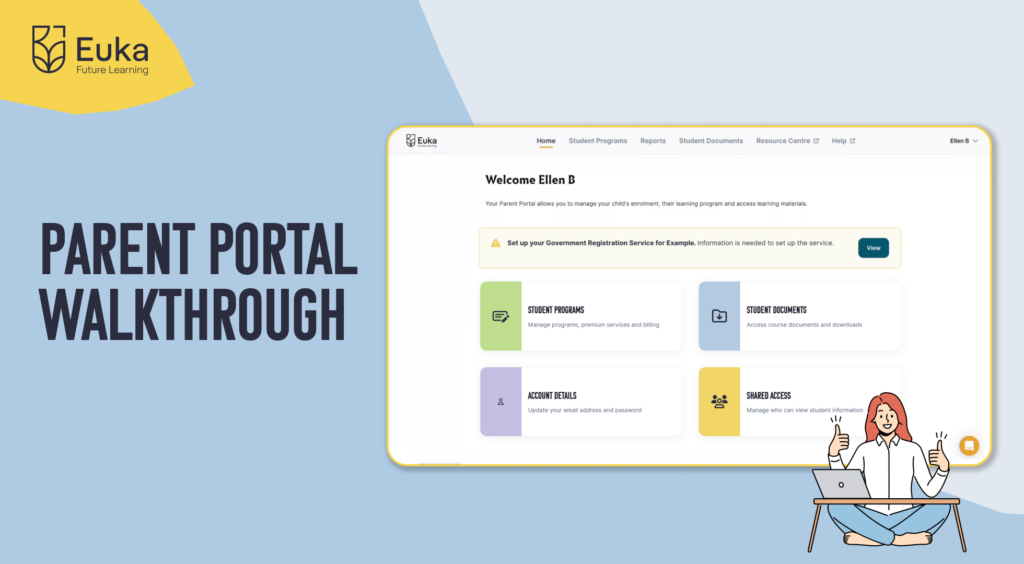
Euka Parent Portal Walkthrough The Parent Portal is where you manage each child’s enrolment, subjects, learning resources, reports, premium services and billing. This guide covers every section of the portal and what you can do in it. Prefer to watch? Ellen Brown, Euka’s Head of Education, tours the Parent Portal in this video. In this […]
Euka Parent Portal Walkthrough The Parent Portal is where you manage each child’s enrolment, subjects, learning resources, reports, premium services and billing. This guide covers every section of the portal and what you can do in it. Prefer to watch? Ellen Brown, Euka’s Head of Education, tours the Parent Portal in this video. In this […]
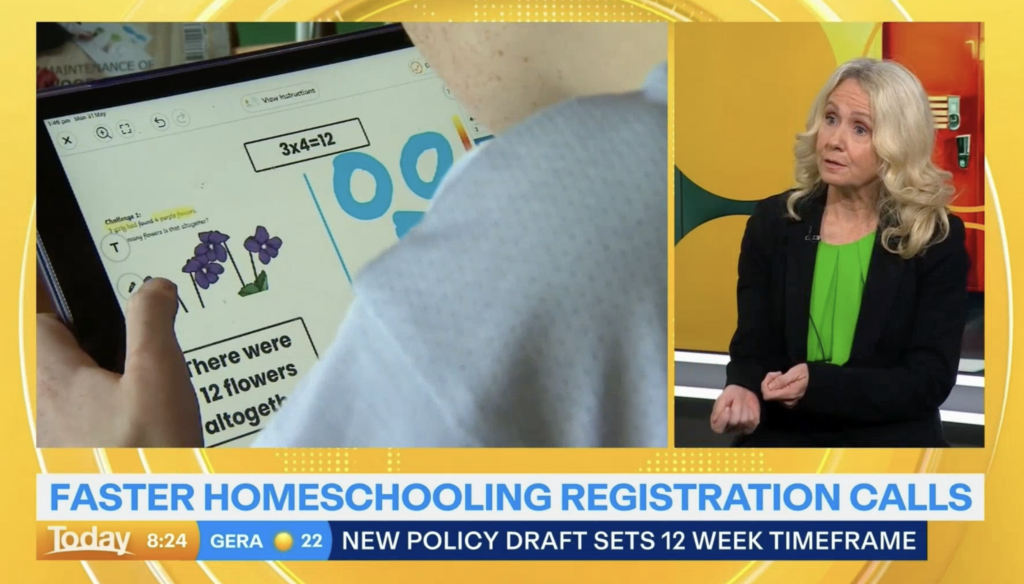
Ellen Brown on the Today Show, representing Australian homeschooling families’ interests, Channel 9 Written by Ellen Brown Founder & Head of Education, Euka Future Learning Ellen Brown is a mother of five and the founder and Head of Education of Euka Future Learning — Australia’s largest online homeschooling curriculum provider. With over 25 years of […]
Ellen Brown on the Today Show, representing Australian homeschooling families’ interests, Channel 9 Written by Ellen Brown Founder & Head of Education, Euka Future Learning Ellen Brown is a mother of five and the founder and Head of Education of Euka Future Learning — Australia’s largest online homeschooling curriculum provider. With over 25 years of […]
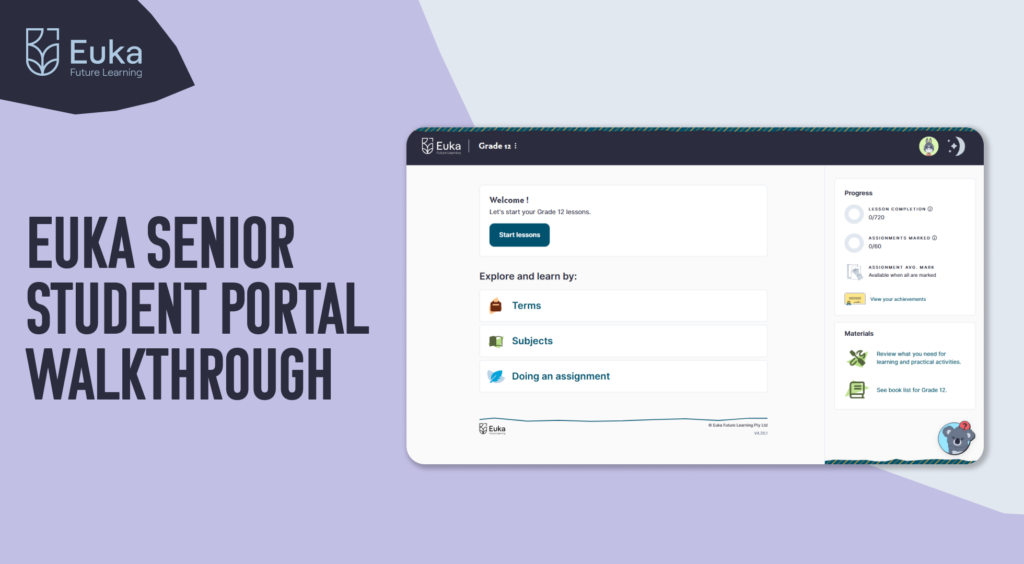
Watch the full Senior Portal walkthrough once, then use the sections below to revisit anything at your own pace.
Watch the full Senior Portal walkthrough once, then use the sections below to revisit anything at your own pace.